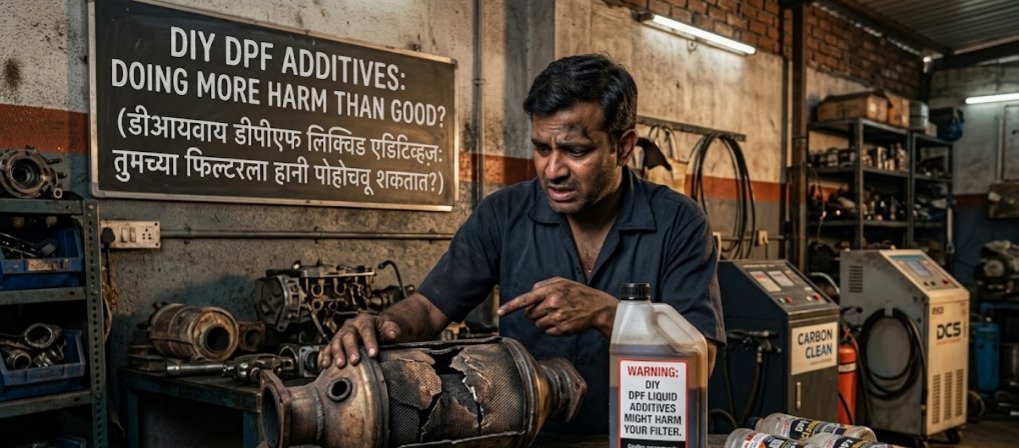
Modern diesel engines rely heavily on the Diesel Particulate Filter (DPF) to trap toxic soot and reduce harmful emissions. However, soot accumulation is inevitable over time, leading many vehicle owners to search for a quick dpf cleaning solution. While off-the-shelf liquid additives promise a fast, inexpensive fix, pouring chemical cleaners directly into your fuel tank often creates more problems than it solves. Instead of restoring engine performance, DIY liquids can permanently damage the filter substrate. DPF Liquid Additives, Understanding the risks of quick chemical fixes highlights why professional treatment using a dpf cleaning machine remains the safest way to maintain your vehicle’s exhaust system.
What Is a DPF and How Does It Work?
The Diesel Particulate Filter is an essential component located within the exhaust system of modern diesel vehicles. Its primary function is to capture microscopic soot particles produced during fuel combustion, preventing them from entering the atmosphere.
The Thermal Regeneration Process
Under normal driving conditions—specifically long highway trips—the exhaust system reaches temperatures between 550°C and 600°C. At these elevated temperatures, the trapped soot burns off naturally, converting into a tiny amount of ash. This self-cleaning mechanism is known as passive regeneration.
When vehicles are driven mostly on short city trips, the exhaust system never reaches the required temperature. Soot continues to accumulate, triggering active regeneration, where the engine control unit (ECU) injects extra fuel to artificially raise exhaust temperatures.
The Temptation of DIY DPF Liquid Additives
When a DPF warning light turns on, drivers often seek the quickest and cheapest fix. Chemical pour-in treatments, widely marketed as a complete dpf cleaner, claim to lower the temperature required for soot burn-off.
Vehicle owners prefer these products because they:
- Cost significantly less upfront than workshop services.
- Require no mechanical skills or tools.
- Promise instant results without removing parts from the vehicle.
While these additives may occasionally assist with minor soot buildup during long driving runs, they fail when applied to heavily clogged filters.
Why DIY DPF Liquid Additives Do More Harm Than Good
Pouring chemical additives into your tank appears simple, but the chemistry inside the exhaust pipe tells a different story. Here is how DIY solutions can degrade your filter over time.
1. Risk of Uncontrolled Thermal Runaway
Most chemical additives work by lowering the ignition temperature of soot. However, when soot deposits are already heavy, adding a chemical catalyst can cause soot to burn uncontrollably fast. This phenomenon—known as thermal runaway—causes localized temperatures inside the filter to spike above 1,000°C.
Exhaustive chemical reactions can crack or melt the delicate ceramic substrate (cordierite or silicon carbide) inside the filter housing, rendering the unit completely useless.
2. Ash Accumulation and Blockage
Soot can be burned away, but ash cannot. Liquid additives often contain metallic catalysts (such as cerium or iron oxides). When these chemicals burn, they leave behind non-combustible ash residues inside the microscopic channels of the filter. Over time, this ash creates a permanent restriction that no liquid additive can break down, reducing exhaust flow permanently.
3. Fuel Injector and Sensor Contamination
Additives mixed into the fuel tank pass through the fuel lines, high-pressure pump, and delicate fuel injectors before ever reaching the exhaust. Aggressive solvents can wear down internal seals, clog injector nozzles, and coat oxygen or differential pressure sensors in the exhaust line with chemical residues, leading to inaccurate ECU readings.
4. False Sense of Security
A chemical cleaner might temporarily extinguish the dashboard warning light by clearing a small amount of surface soot. However, if the underlying issue—such as short-trip driving habits, faulty EGR valves, or bad fuel injectors—is not addressed, the filter will clog again rapidly, often worse than before.
DIY Liquid Additives vs. Professional Mechanical Cleaning
| Feature | DIY Liquid Additive | Professional DPF Machine Cleaning |
| Primary Method | Chemical temperature reduction | Fluid/Pneumatic flushing & drying |
| Soot Removal | Partial (Burns surface soot) | 98%+ (Removes soot completely) |
| Ash Removal | None (Adds residual ash) | Fully flushes accumulated ash |
| Filter Damage Risk | High (Thermal shock/cracking) | Extremely Low (Controlled pressure) |
| Long-Term Value | Temporary relief | Restores near-factory performance |
The Safer Alternative: Professional DPF Cleaning Machine Services
When routine driving cannot clear a blocked filter, attempting a quick chemical fix puts expensive components at risk. The only reliable approach to restoring a clogged filter involves off-car servicing using a specialized dpf cleaning machine.
How Professional Machine Cleaning Works
- Inspection and Testing: Technicians use endoscopes and pressure differential gauges to check for structural cracks, substrate melting, and baseline flow resistance.
- Controlled Flush: The filter is removed and mounted into a dedicated cleaning rig. High-pressure air, warm water, and specialized non-corrosive aqueous solutions flow in reverse through the filter channels.
- Ash and Soot Extraction: The machine washes away both unburned soot particles and accumulated metallic ash without exposing the ceramic core to extreme thermal stress.
- Drying and Validation: The filter is thoroughly dried using hot air cycles and re-tested for air permeability before being reinstalled on the vehicle.
For automotive service providers looking to expand their workshop offerings, investing in a high-quality dpf cleaning machine in india provides a reliable way to offer customers certified, damage-free filter restoration.
Practical Tips to Maintain Your DPF Naturally
To avoid severe blockages and extend the operational life of your filter, adopt these preventive maintenance habits:
- Drive at Highway Speeds Regularly: Spend at least 20–30 minutes at sustained speeds above 60 km/h once every two weeks to allow natural thermal regeneration.
- Use Low-SAPS Engine Oil: Always use engine oil specifically rated for DPF vehicles (Low Sulfated Ash, Phosphorus, and Sulfur) to minimize ash buildup during normal oil consumption.
- Fix Engine Issues Promptly: Address check-engine lights immediately. Faulty EGR valves, failing glow plugs, or leaking turbo chargers directly increase soot output.
- Avoid Constant Short Trips: Frequent stop-and-go driving prevents the exhaust system from reaching operational temperatures, accelerating soot accumulation.
Authority
- European Automobile Manufacturers’ Association (ACEA): For official specifications on Low-SAPS lubricants and emissions standards.
- Society of Automotive Engineers (SAE): For technical documentation regarding DPF regeneration physics and substrate integrity.
While quick chemical additives promise an effortless solution, using a DIY dpf cleaning solution frequently leads to cracked ceramic cores, heavy ash buildup, and expensive replacement costs. Liquid additives simply cannot overcome structural ash blockage or address severe soot buildup safely. Protecting your vehicle’s engine performance and exhaust system requires professional care using advanced equipment designed to restore optimal airflow without causing structural damage.
Is your DPF warning light on, or is your engine losing power?
Don’t risk damaging your expensive exhaust system with harsh chemical additives. [Contact our expert team today] to schedule a professional diagnosis and complete restoration using our state-of-the-art dpf cleaning machine. Restore your vehicle’s fuel efficiency, engine power, and emissions performance safely!
Frequently Asked Questions
Can a liquid DPF cleaner remove ash from my filter?
No. Liquid additives are designed to help burn off organic soot. Ash consists of incombustible metallic compounds from burnt engine oil and fuel additives. Ash cannot be burned away and must be physically flushed out using specialized professional equipment.
How often should I perform professional DPF cleaning?
For most passenger and light commercial diesel vehicles, professional off-car cleaning is recommended every 80,000 to 120,000 kilometers, or whenever routine highway regeneration cycles fail to lower filter backpressure.
Are pour-in DPF additives safe for every diesel engine?
Not always. While some mild maintenance additives are safe for light soot prevention, using strong solvent-based cleaners in high concentrations can damage fuel system components, seals, and exhaust temperature sensors.
What happens if I keep driving with a clogged DPF?
Driving with a severely blocked filter creates excessive backpressure in the exhaust system. This can lead to decreased fuel economy, loss of engine power, turbocharger shaft failure, and potential oil contamination as excess fuel dilutes the engine oil.