If you manage a commercial fleet, operate a workshop, or maintain heavy diesel machinery, you know how crucial a Diesel Particulate Filter (DPF) is. Over time, soot and dense ash clog these filters, causing engine power loss, poor fuel efficiency, and expensive breakdowns. Standard thermal burn-offs can clear soot, but they fail to eliminate hard, compressed ash.
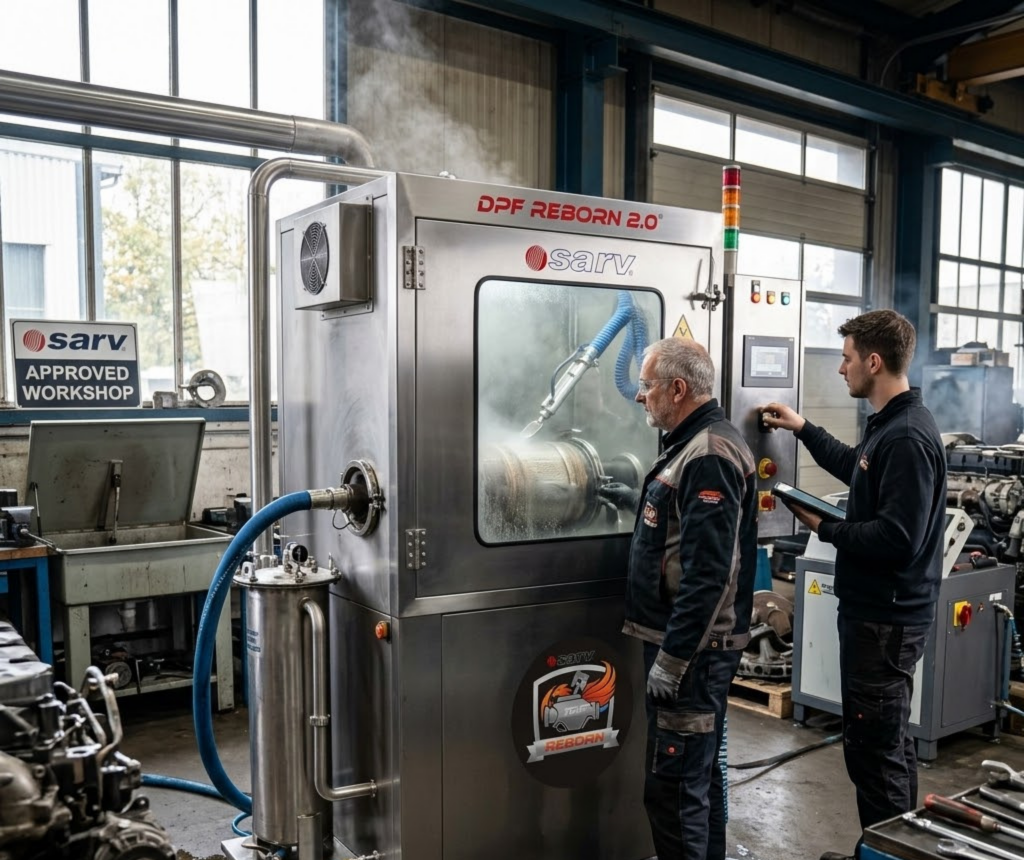
To completely restore a blocked filter, professional mechanics rely on advanced dpf cleaning solution technology paired with high-flow liquid flushing. Utilizing a high-performance dpf cleaning machine, this Hydrodynamic DPF Cleaning Machine process breaks down stubborn deposits without damaging the internal ceramic honeycomb structure.
In this guide, we will break down the exact mechanics behind hydrodynamic dpf cleaning, why liquid-based flushing outperforms older methods, and how choosing the right dpf cleaner system restores filter efficiency to near-factory levels.
What Is Dense Ash and Why Is It Hard to Remove?
To understand why Hydrodynamic DPF Cleaning Machine cleaning is so effective, you must first understand what builds up inside a diesel particulate filter:
- Soot (Unburned Carbon): Formed during incomplete fuel combustion. Soot is volatile and can usually be burned away during standard passive or active vehicle regenerations.
- Dense Ash (Incombustible Waste): Originates from engine oil additives, metallic wear particles, and trace minerals in diesel fuel. Ash does not burn.
+-----------------------------------------------------------------------+
|                         DPF ACCUMULATION                              |
+-----------------------------------------------------------------------+
|  [ Soot (Carbon) ]  -->  Can be burned off via Thermal Regeneration   |
|  [ Dense Ash ]      -->  INCOMBUSTIBLE. Must be mechanically removed. |
+-----------------------------------------------------------------------+
As a vehicle runs, ash gets compacted deeply into the blind channels of the ceramic DPF core. Over thousands of kilometers, this ash turns into a cement-like plug. Thermal regeneration only makes this plug denser. If left untreated, exhaust backpressure rises, forcing the engine control unit (ECU) into limp mode.
Removing this compressed plug requires two things: a liquid medium capable of penetrating microscopic pores and controlled fluid dynamic force.
What Is Hydrodynamic DPF Cleaning Machine?
Hydrodynamic cleaning (often referred to as wet DPF cleaning or hydraulic flushing) is an advanced method that combines pressurized water, specialized chemical agents, and controlled air pulses to flush out ash and soot deposits.
Unlike traditional dry baking or pneumatic blowing—which can take up to 8–10 hours and risk cracking the substrate—hydrodynamic cleaning takes under an hour and delivers a deep, thorough restore across all filter channels.
Step-by-Step: How a Hydrodynamic DPF Cleaning Machine Works
Modern DPF cleaning equipment relies on precise fluid dynamics. Here is how a high-grade dpf cleaning machine removes dense ash step-by-step:
[ Step 1: Pre-Testing ] ➔ [ Step 2: Chemical Soaking ] ➔ [ Step 3: Hydrodynamic Flushing ] ➔ [ Step 4: Hot Air Drying ] ➔ [ Step 5: Final Inspection ]
Step 1: Diagnostic & Backpressure Pre-Testing
Before any liquid touches the filter, the operator mounts the DPF onto the machine’s testing station.
- Visual Inspection: Checked for internal cracks, melted substrate, or structural collapse using an endoscope.
- Flow & Air Pressure Test: The machine measures initial backpressure (in mbar) across the filter. This establishes a baseline measurement to compare against post-cleaning performance.
Step 2: Chemical Pre-Soaking with a Specialized DPF Cleaning Solution
Dense ash is held together by oily residues and sticky hydrocarbon binders. Simply running water through the core will not dissolve these bonds.
- A targeted, biodegradable dpf cleaning solution is introduced into the filter channels.
- The chemistry breaks down the oily film surrounding the ash crystals without corroding noble metals like Platinum and Palladium present in the catalytic coating.
Step 3: Dual-Direction Hydrodynamic Flushing
Once the chemical agent softens the ash matrix, the main cleaning cycle begins inside the sealed chamber of the dpf cleaner.
- Water Medium Injection: Water mixed with specialized liquid additives fills the DPF channels.
- Controlled Pneumatic Impulses: The machine injects micro-pulses of compressed air into the liquid stream. This creates a powerful cavitation wave (kinetic force) through the filter cells.
- Counter-Flow Flushing: Fluid is forced through the filter in both the normal flow direction and the reverse direction. Reverse flushing is critical because ash collects at the inlet side of the channels; pushing it back out the way it entered prevents core compaction.
Because water is incompressible, the Hydrodynamic DPF Cleaning Machine force dislodges even the dense ash plugs at the end of the channel walls, sweeping them cleanly out into the machine’s filtration collection tank.
Step 4: Multi-Stage Drying Cycle
Reinstalling a wet DPF into a diesel engine can instantly turn remaining loose soot into mud or cause thermal shock when hot exhaust gases hit moisture.
- The machine switches to a high-volume hot air drying mode (typically 80°C to 120°C).
- Air is blown through the core until moisture levels drop to zero, ensuring the ceramic substrate is fully dry and stable.
Step 5: Post-Cleaning Backpressure Verification
Once dry, the machine performs a final automated airflow and backpressure check.
- A successful wash typically reduces backpressure by 95% to 99%, bringing airflow characteristics back to original factory specifications.
- The machine generates a test report proving the differential pressure drop before and after the service.
Hydrodynamic DPF Cleaning Machine vs. Other DPF Cleaning Methods
To understand why wet Hydrodynamic DPF Cleaning Machine has become the preferred industry standard worldwide—and specifically why demand for a high-efficiency dpf cleaning machine in india is growing rapidly across commercial transport sectors—let us compare the common methods:
| Feature / Method | Thermal Baking (Dry) | Pneumatic Air Blowing | Hydrodynamic Wet Cleaning |
| Ash Removal Efficiency | Low (only burns soot) | Moderate (removes loose ash) | High (removes dense ash & soot) |
| Process Time | 8 – 12 hours | 1 – 2 hours | 30 – 60 minutes |
| Risk of Core Thermal Crack | High | Low | Zero |
| Chemical Wash Included | No | No | Yes (Softens Ash Matrix) |
| Substrate Safety | Moderate | High | High |
For official regulatory standards on heavy-duty diesel exhaust emissions and particulate limits, consult the U.S. Environmental Protection Agency (EPA) Diesel Emissions Guide or equivalent local transportation authorities like the European Emission Standards.
Benefits of Investing in Hydrodynamic DPF Cleaning Equipment
Whether you run a vehicle service center or operate a logistics fleet, switching to hydrodynamic DPF restoration provides tangible operational advantages:
- Restores Engine Horsepower & Torque: Clearing backpressure allows the engine to breathe freely, restoring lost acceleration.
- Drastically Improves Fuel Economy: Reduced exhaust resistance means the engine spends less energy pushing out exhaust gases.
- Extends DPF Service Life: Regular hydrodynamic servicing prevents permanent ash vitrification, keeping original filters functional for hundreds of thousands of kilometers longer.
- Eco-Friendly Ash Management: Advanced wet cleaning machines feature multi-stage internal wastewater filtration loops. Dislodged ash and heavy metals are trapped in filter bags for safe disposal rather than vented into the shop air as hazardous dust.
Dense ash buildup is an inevitable reality for modern diesel vehicles, but it does not mean you need to buy an expensive replacement filter. Hydrodynamic cleaning combines chemical softening with controlled liquid kinetic force to clear ash that thermal baking simply cannot touch. By incorporating a modern DPF cleaning system into routine maintenance, vehicle owners and fleet managers save thousands while keeping their engines running at peak efficiency.
Ready to Upgrade Your Workshop’s DPF Servicing Capabilities with Hydrodynamic DPF Cleaning Machine?
Don’t let blocked diesel particulate filters slow down your operations or drain your budget. Explore our range of industrial-grade Hydrodynamic DPF Cleaning Machine equipment and eco-friendly cleaning solutions today.
👉 [Contact Our Technical Specialists Today] to request a live demo or get a customized quote for your workshop!
Frequently Asked Questions
No. Quality DPF ceramic substrates (such as Silicon Carbide or Cordierite) are fully water-resistant. As long as the hydrodynamic machine uses regulated pressure pulses and includes a complete drying cycle, the process is completely safe for the filter core.
The entire hydrodynamic process—including diagnostic testing, chemical pre-soaking, dual-direction flushing, and hot air drying—typically takes between 30 to 60 minutes per filter.
Professional DPF cleaning solutions are specifically formulated with pH-neutral or controlled chemical agents that dissolve oil binders and ash without harming the platinum, palladium, or rhodium coatings on the filter substrate.
For heavy commercial vehicles and trucks, a full hydrodynamic ash cleaning is recommended every 150,000 to 200,000 kilometers, or whenever differential pressure tests indicate dense ash accumulation that passive regeneration cannot clear.