For fleet operators and long-haul commercial truck drivers, time on the road directly translates to revenue. However, modern diesel engines come with strict emissions standards that require specialized exhaust components. The Diesel Particulate Filter (DPF) is one of the most critical parts of this system, responsible for trapping dangerous soot and particulate matter before it escapes into the air.
To keep your fleet running smoothly without unexpected breakdowns, using a high-quality DPF cleaning solution alongside a strict preventive maintenance routine is essential. In this guide, we will break down a complete DPF maintenance checklist designed specifically for long-haul commercial trucks.
Why DPF Maintenance Checklist is Critical for Commercial Fleets
A clogged DPF does much more than trigger a warning light on your dashboard. Over time, accumulated soot turns into unburnable ash. If you ignore this accumulation, your engine suffers from excessive backpressure.
Here is what happens when DPF maintenance is neglected:
- Reduced Fuel Efficiency: The engine works harder to push exhaust gases through a restricted filter, leading to higher fuel consumption.
- Engine Power Loss: Heavy soot loads force the engine into “limp mode” to prevent severe mechanical damage.
- Costly Replacements: Replacing a completely ruined DPF unit costs thousands of dollars compared to routine maintenance.
- Unplanned Downtime: A truck sitting in a repair shop isn’t making money.
Proper DPF cleaning keeps your exhaust system flowing freely, saving you significant money on fuel and repairs over the long haul.
The Ultimate DPF Maintenance Checklist
To maximize the lifespan of your filter and avoid sudden engine failures, follow this simple step-by-step checklist.
1. DPF Maintenance Checklist : Monitor Dashboard Regeneration Indicators
Commercial trucks perform automatic passive and active regenerations to burn off trapped soot using high heat.
- Check Passive Regeneration: Ensure your trucks spend enough time at highway speeds so exhaust temperatures naturally burn off soot.
- Watch for Manual Filter Alerts: If a truck does frequent short stops or operates in heavy traffic, active regeneration may fail. Drivers must initiate a parked (forced) regeneration as soon as the system prompts them.
2. DPF Maintenance Checklist : Inspect and Maintain Engine Oil Levels
Engine oil composition directly impacts DPF health.
- Use Low-SAPS Oil: Always use Low Sulfated Ash, Phosphorus, and Sulfur (Low-SAPS) engine oil. Standard oils release heavy metallic ash when burned, which permanently clogs the DPF.
- Check for Oil Leaks: Upstream oil leaks introduce liquid contaminants into the exhaust system, accelerating filter degradation.
3. DPF Maintenance Checklist : Check Fuel Injectors and Exhaust Systems
Unburnt fuel entering the exhaust stream can ruin a filter rapidly.
- Inspect fuel injectors regularly for leaks or improper spray patterns.
- Check the Hydrocarbon Doser (if equipped) to ensure it delivers fuel properly during active regeneration.
- Look for exhaust leaks upstream of the DPF, as temperature drops can prevent proper soot burn-off.
4. DPF Maintenance Checklist : Regularly Use Quality Chemical Additives
Using an effective dpf cleaner in your fuel system helps lower the ignition temperature of soot. This allows the filter to burn off trapped particles during normal driving conditions without requiring extreme heat cycles.
Professional Cleaning: Chemical Solutions vs. Machine Cleaning
While chemical treatments and passive regenerations handle daily soot accumulation, they cannot remove ash. Ash is a solid byproduct of burned oil and fuel additives that stays trapped inside the honeycomb structure forever unless physically cleaned.
Chemical DPF Cleaning Solutions
A liquid DPF cleaning solution is ideal for maintenance or light soot blockages. It flushes out sticky residues, carbon build-up, and unburnt hydrocarbons during scheduled service intervals without causing thermal shock to the ceramic substrate.
Professional DPF Cleaning Machines
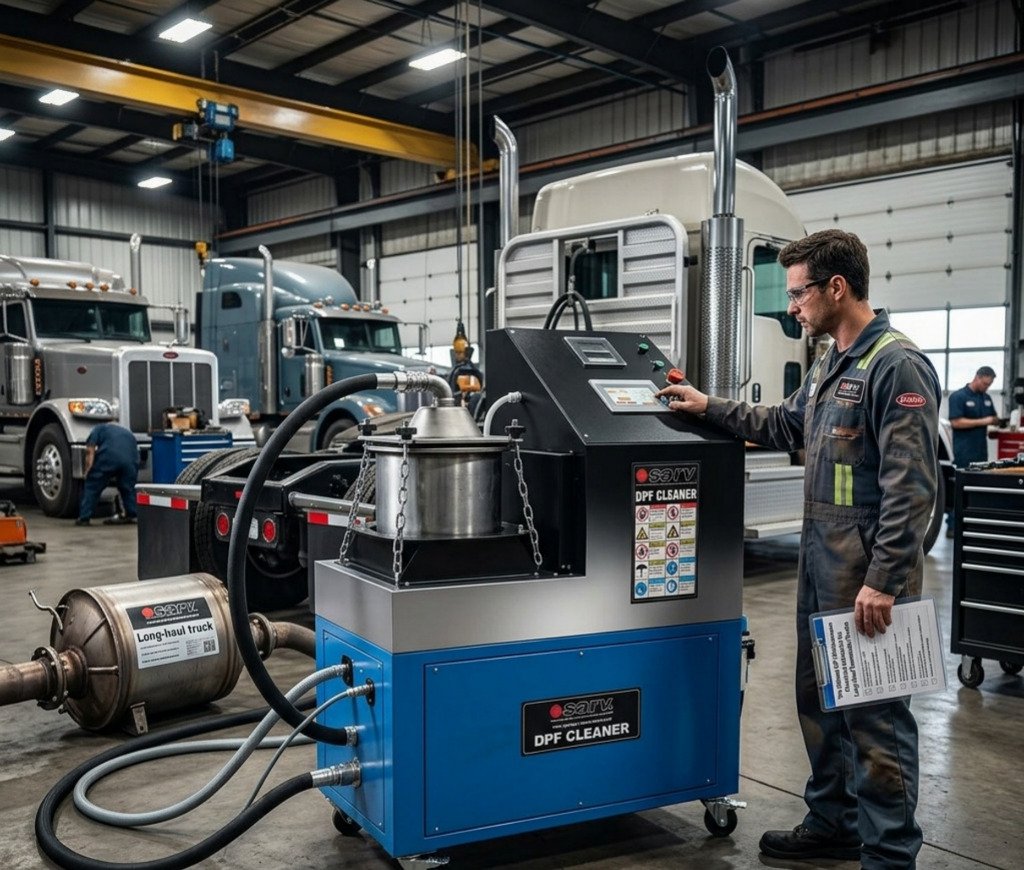
When ash levels reach critical limits, flushing alone isn’t enough. The filter must be removed and serviced using a dedicated dpf cleaning machine.
Professional machines use a combination of pneumatic air blasting, high-pressure liquid flushing, and thermal baking to restore filters to nearly 98% of their original OEM flow capacity.
For official emissions guidelines and fleet compliance standard updates, refer to the U.S. Environmental Protection Agency (EPA) Diesel Emissions Control Standards.
For businesses managing fleet service stations in growing logistics hubs, investing in an industrial-grade dpf cleaning machine in india or local equipment suppliers can open new revenue streams while keeping local fleets fully operational.
How Often Should You Clean Your Commercial DPF?
The ideal service interval depends on duty cycles, fuel quality, and engine health:
| Vehicle Type / Usage | Recommended Service Action | Interval |
| Long-Haul Highway Trucks | Chemical Flush / Additive Treatment | Every 50,000 – 75,000 Miles |
| Long-Haul Highway Trucks | Complete Machine Wash & Ash Removal | Every 150,000 – 250,000 Miles |
| Severe Duty / Stop-and-Go Fleets | Complete Machine Wash & Ash Removal | Every 100,000 – 150,000 Miles |
Final Thoughts on DPF Maintenance
Preventive care is always far cheaper than emergency repairs. By tracking regeneration cycles, using low-ash oils, applying a reliable DPF cleaning solution, and scheduling periodic machine cleaning, you can extend your exhaust system’s life by hundreds of thousands of miles.
Need Reliable DPF Maintenance Solutions for Your Fleet?
Keep your long-haul trucks running at peak efficiency with our professional-grade DPF maintenance products and heavy-duty workshop equipment. Contact our fleet care specialists today to get a quote or find the best cleaning equipment for your business!
👉 [Get in Touch with Our DPF Experts Today]
6. FAQs
How do I know if my DPF needs a professional cleaning?
Common signs include frequent regeneration cycles, a noticeable drop in fuel economy, engine power loss (limp mode), and persistent DPF light indicators on your dashboard.
Can I clean a heavy truck DPF without removing it?
Liquid chemical cleaning solutions can clear light soot and carbon build-up on-vehicle. However, dense ash accumulation requires removing the filter for deep cleaning in a specialized machine.
Is chemical DPF cleaning safe for ceramic filters?
Yes, as long as you use a high-quality, pH-neutral DPF cleaning solution specifically formulated for diesel exhaust systems that will not damage precious metal catalyst coatings.