As global sustainability targets tighten and governments implement strict environmental regulations, commercial fleets face unprecedented pressure to lower carbon footprints. For logistics companies relying on heavy-duty diesel vehicles, compliance with modern green emissions standards is no longer optional—it is critical for long-term business survival.
Achieving these rigorous targets requires maintaining optimum engine health and exhaust performance. This is where adopting an advanced dpf cleaning solution becomes essential. Diesel Particulate Filters (DPFs) trap harmful soot, particulate matter, and unburnt hydrocarbons before they exit the tailpipe. However, as ash builds up over time, filter efficiency drops, fuel consumption spikes, and emissions skyrocket. Implementing a structured maintenance routine backed by a high-performance dpf cleaner ensures your logistics operations remain compliant, cost-effective, and environmentally friendly.
What is a DPF and Why Does It Matter for Logistics Fleets?
A Diesel Particulate Filter (DPF) is an exhaust aftertreatment device engineered specifically to capture harmful soot and particulate matter (PM) from diesel engines. In commercial transport and logistics, heavy-duty trucks cover thousands of kilometers daily under varying loads, making effective soot filtration vital.
How soot buildup affects engine performance
When a DPF functions normally, trapped soot is periodically burned off through passive or active regeneration. However, non-combustible ash—originating from engine oil additives and fuel contaminants—remains locked inside the filter substrate. Over time:
- Exhaust backpressure increases, forcing the engine to work harder to push exhaust gases out.
- Fuel consumption rises, increasing operational expenditure across the fleet.
- Engine components experience wear, leading to premature turbocharger and EGR valve failures.
- Tailpipe emissions worsen, risking compliance penalties during roadside or annual vehicle inspections.
Routine reliance on an industrial dpf cleaning procedure restores airflow dynamics, protecting both your engine components and your bottom line.
The Role of DPF Cleaning Solution in Emission Reduction
Logistics managers often debate whether passive filter regeneration is sufficient to meet strict emissions compliance. While vehicle-led regeneration burns off fresh soot, it cannot remove accumulated ash. A specialized chemical and liquid-based dpf cleaning solution is specifically designed to flush out dense soot cakes and stubborn ash deposits that high temperatures cannot eliminate.
+-----------------------------------------------------------------------+
|                       DPF MAINTENANCE FLUID FLOW                      |
+-----------------------------------------------------------------------+
|  1. Accumulation (Soot & Ash Build-up in Substrate)                   |
|     ↓                                                                 |
|  2. Soaking / Flushing (Applying Liquid DPF Cleaning Solution)        |
|     ↓                                                                 |
|  3. Mechanical / Pneumatic Wash (DPF Cleaning Machine Integration)    |
|     ↓                                                                 |
|  4. Air Drying & Flow Testing (Restoring Up to 98% OEM Airflow)       |
+-----------------------------------------------------------------------+
When applied properly during preventative maintenance, high-grade cleaning solutions offer clear technical advantages:
- Restores OEM Airflow: Dissolves trapped hydrocarbons to clear fine ceramic channels without damaging precious metals inside the washcoat.
- Lowers Toxic Outflow: Ensures harmful particulate matter, nitrogen oxides ($NO_x$), and carbon monoxide ($CO$) remain within regulated limits.
- Prevents Frequent Thermal Stress: Reduces the need for forced, high-temperature active regenerations, which stress engine metal components and waste diesel fuel.
Key Benefits of Regular DPF Cleaning Solution for Commercial Fleets
Maintaining clean filters across your logistics operations unlocks multiple environmental, operational, and financial advantages.
1. Compliance with Green Emissions Standards
Meeting local and international transport standards requires low particulate emissions. By integrating regular dpf cleaning solution into your maintenance schedule, your fleet comfortably meets compliance checks and avoids costly non-compliance fines or vehicle groundings.
2. Improved Fuel Efficiency and Lower Operational Costs
An ash-clogged filter forces the engine to burn additional fuel simply to push exhaust gases out. Cleaning the filter eliminates exhaust restrictions, restoring optimal engine breathing and yielding fuel savings between 3% and 8% across heavy fleet operations.
3. Extended Vehicle and Filter Lifespan
Replacement DPF units for commercial trucks represent a massive capital expense. Utilizing a professional-grade dpf cleaner systematically extends the service life of original equipment filters, deferring replacement costs by hundreds of thousands of kilometers.
4. Reduced Unplanned Downtime
Engine warning lights and limp-mode triggers caused by clogged filters cause delivery delays and logistics bottlenecks. Scheduled maintenance keeps your trucks on the road and delivering shipments reliably.
Advanced Equipment: Why Modern Fleets Need a DPF Cleaning Solution Machine
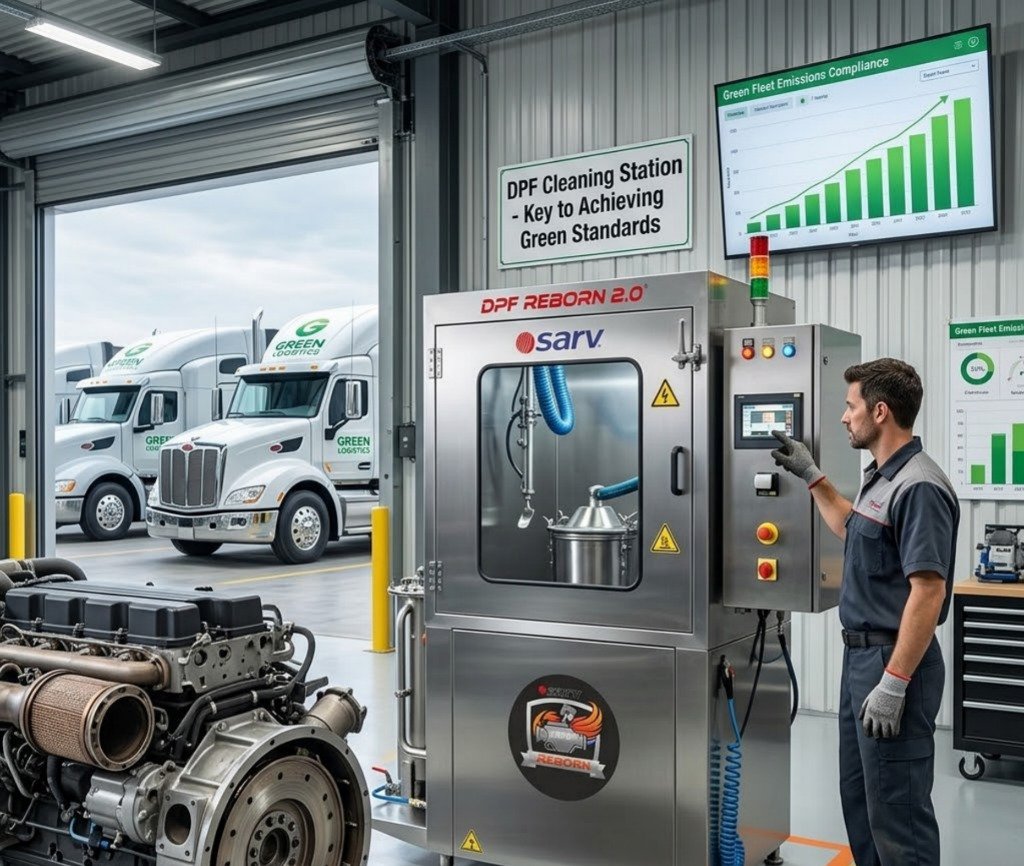
While basic chemical flush kits work for light passenger cars, commercial transport fleets require robust industrial equipment to achieve complete restoration. Investing in or partnering with facilities equipped with an automated dpf cleaning machine ensures consistent, measurable results.
These specialized machines use aqueous washing, controlled pressure pulses, and targeted air drying to flush contaminants out of the cell channels.
Rising Demand in Emerging Manufacturing and Transport Hubs
Global logistics networks are expanding rapidly in fast-growing economies. For instance, the demand for an industrial-grade dpf cleaning solution machine in india has increased significantly as transport fleets adapt to stringent BS-VI (Bharat Stage VI) emissions norms. Modern fleet operators in these regions are shifting away from manual, dangerous acid washes toward safe, automated washing systems that protect sensitive internal substrates.
Key Features of a Commercial-Grade DPF Cleaning System
| Feature | Function / Benefit |
| Pneumatic Pulse Technology | Dislodges stubborn ash without cracking delicate ceramic cells. |
| Differential Pressure Testing | Measures precise backpressure levels before and after the wash. |
| Closed-Loop Filtration | Traps washed-out toxic ash, preventing secondary environmental contamination. |
| Controlled Thermal Drying | Prepares the unit for immediate reinstallation without moisture traps. |
Best Practices for Fleet DPF Maintenance Protocols
To maximize fleet uptime and minimize carbon footprints, logistics companies should establish clear maintenance protocols:
- Monitor Exhaust Backpressure: Utilize onboard telemetry to track backpressure and differential sensor warnings across all vehicles.
- Schedule Preventive Cleaning: Clean DPF units based on distance (e.g., every 100,000 to 150,000 km) rather than waiting for warning lights or engine failures.
- Use Quality Engine Oils: Always use Low-SAPS (Sulfated Ash, Phosphorus, and Sulfur) engine oils to reduce the rate of ash accumulation.
- Partner with Certified Service Centers: Ensure your service provider uses an eco-friendly dpf cleaning solution and modern testing equipment.
For more information on national heavy-duty vehicle regulations and official emission limits, refer to the EPA Heavy-Duty Highway Program Guidelines or equivalent local transport authority standards.
Ready to Reduce Fleet Emissions and Cut Fuel Costs?
Don’t let clogged diesel particulate filters slow down your logistics operations or compromise your green standards. Partner with our fleet maintenance specialists today to access top-tier dpf cleaning machine technology and premium dpf cleaning solution products tailored to your commercial vehicles.
👉 [Contact Our Fleet Maintenance Team Today] to schedule an emissions audit or request a custom quote!
FAQs
How often should a logistics company clean a truck’s DPF?
For heavy-duty commercial trucks, professional cleaning is recommended every 100,000 to 150,000 kilometers, or annually, depending on operating conditions, fuel quality, and driving routes.
Is using a liquid DPF cleaning solution safe for ceramic filters?
Yes, high-grade liquid solutions are formulated specifically to dissolve ash and soot without damaging internal ceramic monoliths or precious metal coatings (like platinum and palladium).
What is the difference between active regeneration and machine cleaning?
Active regeneration burns off soot using high exhaust temperatures while the vehicle is running. It cannot, however, remove ash. Machine cleaning physically flushes out non-combustible ash and heavy deposits.
Can a clean DPF really lower company fuel costs?
Yes. Clearing backpressure allows the engine to breathe freely, restoring lost horsepower and improving overall fuel economy by up to 8%.