The introduction of BS6 (Bharat Stage 6) emission norms completely transformed the Indian automotive industry. With the implementation of the stricter BS6 Phase 2 norms, vehicle manufacturers had to upgrade their technology to monitor real-time emissions. For diesel vehicle owners and fleet operators, this shift means paying closer attention to exhaust systems.
At the heart of this system is the Diesel Particulate Filter (DPF). If you operate commercial trucks or passenger diesel cars, finding a reliable dpf cleaning solution is no longer optional—it is a necessity to keep your vehicles legally compliant and running efficiently on Indian roads.
Understanding BS6 Phase 2 Norms and the DPF Connection
What Changed in BS6 Phase 2?
BS6 Phase 1 forced manufacturers to install DPFs to catch harmful particulate matter (soot). However, BS6 Phase 2 introduced Real Driving Emissions (RDE) mandates. Vehicles are no longer tested just in controlled laboratory environments; they are monitored using onboard diagnostics (OBD2) during real-world driving conditions.
Why the Exhaust System Faces More Stress
Because the OBD2 system constantly checks emission levels, even a minor clog in your filter can trigger a dashboard warning light or force your engine into “limp mode.” The strict thresholds mean that regular driving pattern variations—like heavy traffic in Indian cities—directly accelerate soot accumulation.
The Biggest DPF Challenges Under Stricter Indian Norms
Indian driving conditions present unique challenges for modern diesel engines. The strict parameters of BS6 Phase 2 amplify these issues in several ways:
- Frequent Stop-and-Go Traffic: Diesel engines need high temperatures to perform passive regeneration (burning off soot naturally). Heavy traffic jams in Indian metro cities prevent the exhaust from reaching these critical temperatures.
- Rapid Soot Accumulation: Because natural regeneration fails during short city trips, soot builds up much faster, causing frequent blockages.
- The Inevitable Ash Buildup: While soot can be burned off, engine oil byproducts create “ash” inside the filter. Ash cannot be burned away; it must be physically removed using an advanced dpf cleaning machine.
Internal Link Suggestion: [Link to a relevant internal product/service page, e.g., “Check out our range of automated cleaning equipment”]
The Importance of Professional DPF Cleaning Over Short-Term Fixes
When the dreaded DPF warning light turns on, vehicle owners often look for quick fixes. However, under BS6 Phase 2 guidelines, temporary solutions can lead to expensive component failures.
The Problem with Cheap Chemical Sprays
Many drivers attempt to use a basic liquid dpf cleaner poured directly into the fuel tank or sprayed into the exhaust assembly. While these might dissolve surface soot temporarily, they cannot remove hard ash deposits packed deep inside the filter walls.
Why Industrial Cleaning is Required
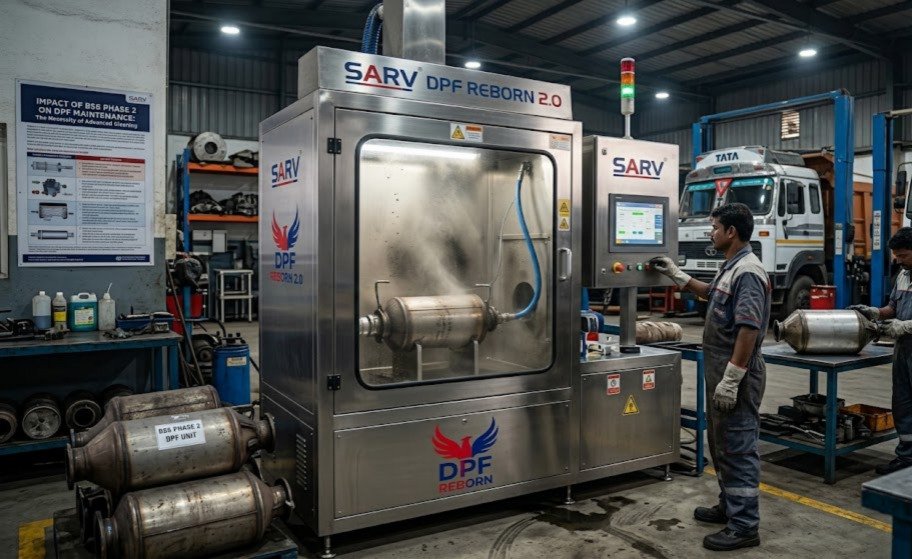
To completely restore a filter to factory standards, physical flushing is necessary. Utilizing a high-quality dpf cleaning machine in india ensures that both soot and hardened ash are safely removed without damaging the delicate, precious-metal-coated ceramic honeycomb structure inside the filter unit.
| Feature               | Fuel Additives / DIY Sprays| Professional Machine Cleaning|

| Soot Removal          | Temporary/Partial          | 100% Effective               |
| Ash Removal           | Completely Ineffective     | 100% Effective               |
| Risk of Filter Damage | High                       | None (controlled environment)|
| Warranty & Legality   | May void OEM warranty      | Keeps vehicle fully compliant|
How Regular DPF Maintenance Saves Heavy Fleet Costs
For logistics providers and commercial fleet operators, vehicle downtime translates directly into lost revenue. Relying on emergency replacements rather than preventive dpf cleaning can ruin operational margins.
- Avoid Expensive Replacements: A brand-new OEM diesel particulate filter can cost anywhere from ₹40,000 to over ₹1,500,000 depending on the vehicle size. Regular servicing costs a fraction of that price.
- Maintain Fuel Efficiency: A clogged filter creates high exhaust backpressure. This forces the engine to work much harder, noticeably dropping your mileage.
- Prevent Turbocharger Damage: Excessive backpressure forces hot exhaust gases back toward the engine, which frequently leads to premature turbocharger failure.
Government emission norms portal:
government emission norms portal
Ministry of Road Transport & Highways (MoRTH)
Choosing the Right DPF Cleaning Equipment for Garages
With millions of BS6 diesel cars and commercial trucks driving across India, the demand for professional maintenance services is skyrocketing. For workshop owners, investing in automated service systems is a highly lucrative business move.
What to Look For in an Industrial Machine
When analyzing options for a dpf cleaning machine, look for units that offer:
- Dual Washing Technology: Systems that combine targeted water flushing with pneumatic air blasts for complete ash removal.
- Backpressure Testing: Built-in testing modules that print out before-and-after pressure reports to prove efficiency to your customers.
- Eco-Friendly Filtration: Closed-loop systems that trap the removed soot and ash responsibly so toxic waste does not pollute the local environment.
Investing in a dedicated infrastructure allows Indian workshops to deliver fast, reliable results that keep transport fleets moving efficiently under strict RDE guidelines.
Conclusion
The BS6 Phase 2 norms have set a high standard for clean air in India, placing the responsibility on advanced engine management and robust exhaust filtration. Neglecting your vehicle’s filtration system leads to poor fuel economy, expensive component failures, and legal non-compliance.
By choosing a professional, machine-based restoration workflow over unverified quick fixes, you protect your engine and secure maximum uptime. Do not wait for a complete system breakdown to take action.
Is your BS6 vehicle facing frequent DPF blockages? Don’t risk expensive engine damage!
Contact DPF Clean India today to discover our advanced, automated DPF cleaning solutions. Keep your fleet running efficiently, maintain peak fuel economy, and stay 100% compliant with BS6 Phase 2 norms.
👉 Get a Free Quote / Book Your Service Now
6. FAQs
What is the main cause of DPF clogging in BS6 Phase 2 vehicles?
The primary cause is low-temperature driving conditions, such as short city trips and stop-and-go traffic. This prevents the exhaust system from reaching the high temperatures required to naturally burn off soot, leading to rapid blockages.
Can I clean a BS6 DPF using manual liquid cleaners?
While liquid cleaners might clear loose soot particles temporarily, they cannot remove accumulated ash. Only a professional machine-based flushing process can thoroughly clear ash without damaging the internal filter substrate.
How often should commercial vehicles get their DPF serviced?
For long-haul commercial trucks operating under BS6 norms, it is recommended to inspect or professionally clean the filter every 80,000 to 100,000 kilometers, or immediately if the dashboard warning light remains on.
Does a clogged exhaust filter affect fuel mileage?
Yes. A clogged filter creates high exhaust backpressure, restricting airflow. This forces the engine to consume more diesel fuel to maintain standard performance levels.