Diesel particulate filters (DPFs) play a vital role in modern diesel vehicles. By trapping harmful soot and ash emissions, they protect our environment and ensure compliance with strict global emission standards. However, over time, these filters naturally become clogged. When regeneration fails to clear accumulated ash, vehicles experience reduced fuel efficiency, frequent warning lights, and sluggish engine performance.
For commercial workshops, fleet owners, and automotive service centers, manually cleaning or prematurely replacing these expensive components is neither cost-effective nor efficient. This is where a fully automatic DPF cleaning machine transforms modern garage operations. By leveraging cutting-edge hydropneumatic technology and intelligent controls, these advanced systems restore diesel particulate filters to near-original condition quickly and safely.
What is a Fully Automatic DPF Cleaning Machine?
A fully automatic DPF cleaning machine is an advanced, self-contained workshop unit designed to thoroughly remove stubborn soot, PM10 particles, and trapped ash from diesel particulate filters and catalytic converters. Unlike manual washing or chemical soaking methods, an automated machine combines high-pressure water, pulsed air technology, and integrated thermal drying into a seamless, closed-loop workflow.
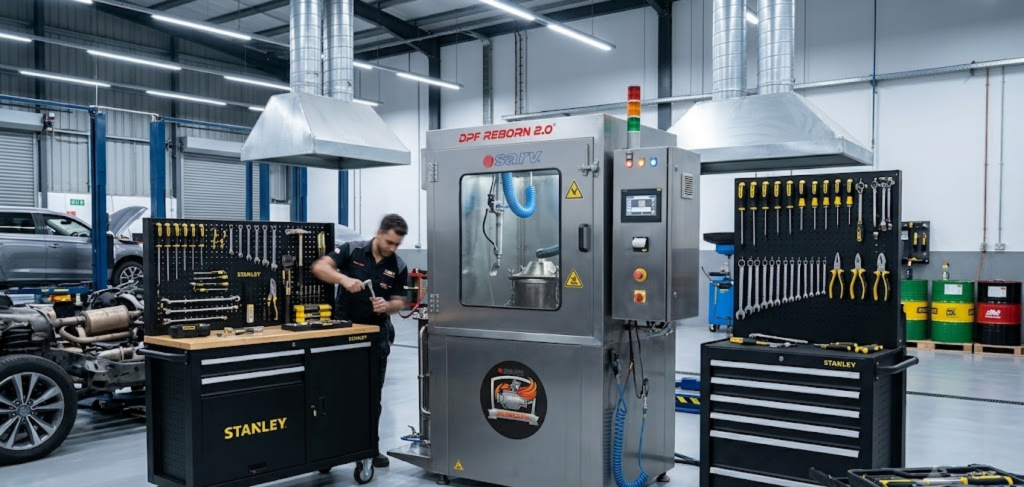
Advanced models, such as the DPF Reborn 2.0® engineered by DPF Clean India (Sarveshwari Group), feature robust 304-grade stainless steel rust-proof construction, touch-screen PLC interfaces, and built-in diagnostic testing. They handle everything from passenger cars and commercial trucks to heavy-duty construction and agricultural machinery.
Why Traditional DPF Cleaning Falls Short
To appreciate the value of an automated system, it helps to understand why traditional methods often fail or create additional problems:
- Incomplete Soot and Ash Removal: Standard passive or active vehicle regeneration only burns off superficial soot. It cannot eliminate non-combustible ash deposits, which permanently accumulate inside the honeycomb channels.
- Risk of Core Damage: Hammering, manual scraping, or using harsh, unregulated chemical solvents can crack or melt delicate ceramic DPF substrates, resulting in expensive replacement bills.
- Messy and Hazardous: Manual washing creates toxic wastewater runoff and exposes workshop technicians to harmful particulate matter.
Automated cleaning machines solve these challenges by enclosing the entire process safely within a sealed chamber while capturing hazardous waste responsibly.
Key Features of Modern Automated DPF Systems
Investing in premium garage equipment requires understanding the core technological features that set professional machines apart:
1. Pulsed Air and Pressurized Water Technology
By alternating bursts of compressed air with pressurized hot water, the machine creates hydrodynamic shockwaves. This dual-action force breaks down hardened blockages deep inside the filter channels without damaging the fragile honeycomb structure.
2. Integrated Differential Pressure Testing
Professional units feature pre- and post-cleaning diagnostic testing. Technicians can measure airflow restriction before starting the cycle and verify restoration performance afterward, generating professional compliance reports for customers via built-in thermal printers.
3. Simultaneous Cleaning and Drying
High-end automated models incorporate dual-operation workflows or built-in high-temperature hot air drying (up to 150°C). Once the washing cycle completes, the filter is thoroughly dried in under 60 minutes, making it immediately ready for reinstallation.
Step-by-Step: How the Automated Cleaning Process Works
Operating a modern fully automatic DPF cleaning machine requires minimal technical intervention, allowing workshops to maximize productivity:
- Inspection and Mounting: The technician mounts the clogged DPF securely into the chamber using pneumatic locking mechanisms.
- Initial Diagnostic Check: The system measures initial airflow and backpressure to determine the blockage severity.
- Automated Hydro-Pneumatic Wash: The machine cycles through precision-controlled water and pulsed air jets, flushing out trapped soot and ash.
- Thermal Drying: Hot air circulates through the filter channels, evaporating residual moisture completely.
- Final Verification: A post-cleaning test confirms that airflow has been restored to factory standards, and a printed report is generated.
Learn more about professional garage setup requirements in our guide on Setting Up a Modern DPF Cleaning Centre.
Major Benefits for Workshops and Fleet Operators
Upgrading your service center with an automated cleaning solution offers exceptional financial and operational returns:
- High Profit Margins: DPF replacement costs thousands of dollars. Charging customers a fraction of that cost for cleaning yields high profit margins per service.
- Time Efficiency: Complete cycles finish in 60–70 minutes, allowing technicians to service multiple filters daily.
- Eco-Friendly Operations: Closed-loop water filtration minimizes environmental impact and keeps workshops compliant with local waste management regulations.
- Universal Compatibility: One machine services light passenger vehicles, heavy-duty commercial trucks, buses, and off-highway machinery.
For detailed guidelines on vehicle emission standards and particulate matter regulations, visit the Environmental Protection Agency (EPA) Diesel Hub.
Ready to upgrade your workshop capabilities and eliminate costly DPF replacements? Discover advanced automated cleaning technology today. Explore the DPF Reborn 2.0 Machine Now or contact our team to schedule a live demonstration!
Frequently Asked Questions
What is a fully automatic DPF cleaning machine?
It is an advanced workshop machine that uses a combination of pressurized hot water and pulsed air technology to thoroughly flush out soot and ash from clogged diesel particulate filters, restoring them to near-original condition.
How long does a complete DPF cleaning cycle take?
Most advanced automated systems complete the entire washing and high-temperature drying cycle in approximately 60 to 70 minutes, making the filter ready for immediate reinstallation.
Can automated cleaning damage ceramic DPF cores?
No. Professional machines use calibrated pressure levels, controlled water temperatures, and non-destructive hydropneumatic pulses specifically engineered to protect delicate ceramic substrates and catalytic coatings.
What types of vehicles benefit from this machine?
Automated DPF cleaners are versatile and can service a wide range of applications, including passenger cars, commercial trucks, buses, construction equipment, agricultural tractors, and marine diesel engines.
Do I need special training to operate the machine?
Modern machines feature intuitive touch-screen PLC interfaces and pneumatic locking systems, making them user-friendly with minimal operator training required.