India’s automotive landscape has undergone a massive transformation in recent years. With the strict enforcement of BS6 (Bharat Stage 6) emission norms across the country, diesel vehicles are now equipped with advanced emission control systems, primarily Diesel Particulate Filters (DPF). While these components effectively trap harmful soot, they frequently get clogged due to urban stop-and-go driving, poor fuel quality, and short trips.
This technical shift creates a massive commercial opportunity for automotive entrepreneurs. Learning how to start a DPF cleaning business in India allows garage owners and new investors to enter a high-demand, high-margin automotive niche. Replacing a clogged DPF can cost vehicle owners anywhere from ₹50,000 to ₹2,500,000 depending on the vehicle type, whereas professional cleaning restores performance at a fraction of the cost.
In this comprehensive guide, we will walk you through the market potential, necessary DPF cleaning equipment, step-by-step setup requirements, and practical tips to build a profitable DPF cleaning workshop in India.
Why DPF Cleaning Business is a High-Profit Business in India
To understand the scope of this industry, one must look at the sheer volume of diesel vehicles on Indian roads. Heavy commercial vehicles, light commercial vehicles (LCVs), SUVs, and luxury diesel cars manufactured under BS6 norms use DPF technology.
Here are the key drivers behind the rising demand for DPF cleaning services:
- Frequent DPF Clogging: Frequent idling and city traffic prevent the exhaust system from reaching the high temperatures required for passive regeneration. Consequently, soot and non-combustible ash accumulate rapidly.
- High Replacement Costs: Vehicle owners prefer professional cleaning because replacement units are exceptionally expensive.
- Government Emission Compliance: Commercial fleet operators must maintain clean exhaust systems to pass mandatory fitness and emission tests.
- High Profit Margins: The operational cost of cleaning a single DPF filter is minimal (water, electricity, and specialized cleaning agent), while service charges range from ₹5,000 to ₹25,000 per filter.
Step 1: Market Research and Target Audience Analysis for DPF Cleaning Business
Before purchasing machinery or renting commercial space, analyzing your local market dynamics is essential. Identify the dominant diesel vehicle segments in your region.
Target Customer Segments:
- Commercial Fleet Operators: Logistics companies, bus operators, and truck fleets that require regular maintenance to avoid breakdown downtime.
- Local Automotive Workshops and Mechanics: Independent garages often lack specialized DPF machinery and prefer outsourcing filter cleaning.
- Individual Diesel Car Owners: Owners of BS6 SUVs and cars experiencing power loss, warning lights, or poor fuel efficiency.
- Construction and Agricultural Equipment Operators: Heavy machinery operating under dusty conditions with frequent filter clogging.
Step 2: Choosing the Right DPF Cleaning Equipment
Selecting the appropriate equipment is the most critical decision when setting up your business. Modern DPF cleaning relies on pneumatic and hydrodynamic technology (water and air pressure combined with safe chemical agents) to thoroughly flush out ash and soot without damaging the ceramic substrate.
To deliver superior results, you should choose between two main types of professional machines:
1. Fully Automatic DPF Cleaning Machine for DPF Cleaning Business
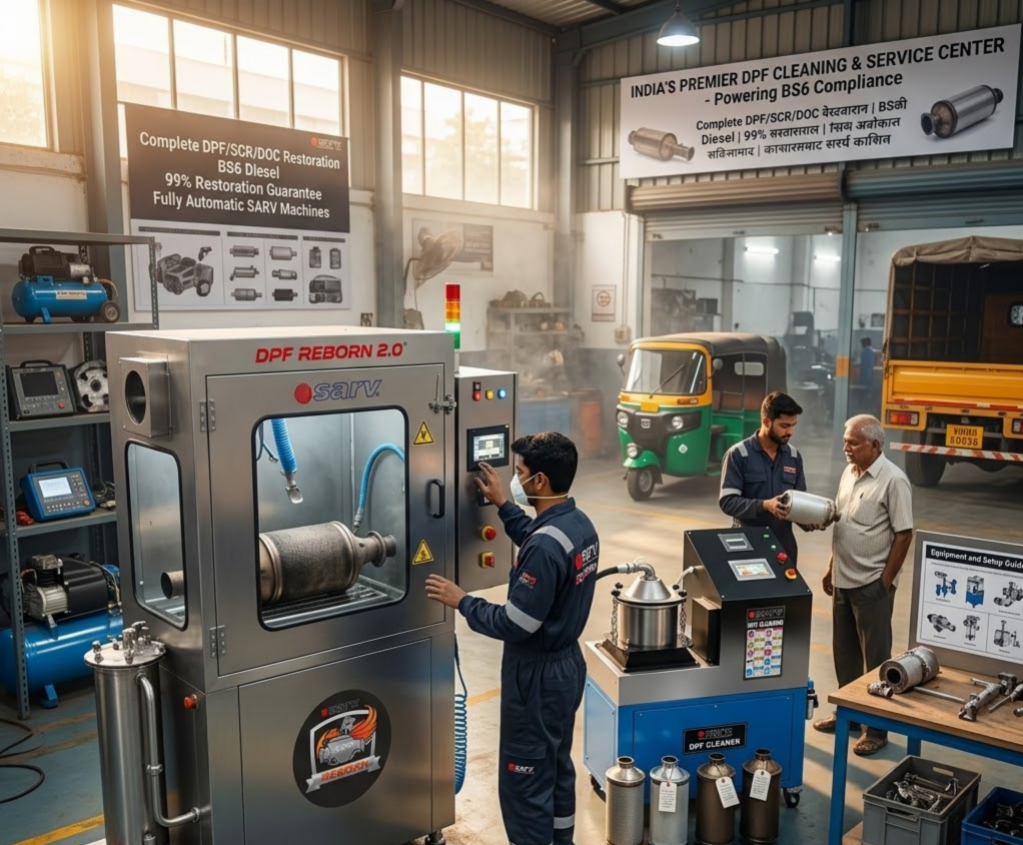
For high-volume workshops, automated operations reduce manual labor and ensure precision cleaning cycles. The Fully Automatic DPF Cleaning Machine provides complete washing, drying, and pressure testing within a closed automated environment.
Key Features & Advantages:
- Integrated drying and testing systems.
- Automatic pressure adjustment based on filter size.
- Fast cycle time, allowing higher daily throughput.
- Clean and eco-friendly workshop operation.
2. Semi Automatic DPF Cleaner for DPF Cleaning Business
If you are starting DPF Cleaning Business with limited budget or launching a smaller service center, a semi-automatic machine provides high efficacy at an accessible price point. The Semi Automatic DPF Cleaning Machine offers robust hydrodynamic flushing capability with manual monitoring options.
Key Features & Advantages:
- Cost-effective initial investment.
- High flushing power suitable for passenger and commercial filters.
- Easy maintenance and user-friendly controls.
Step 3: Location Selection and Infrastructure Requirements
Location plays a key role in accessibility, especially if you plan to service commercial trucks and fleet vehicles.
Space Requirements
- Workshop Area: Minimum 500 to 1,000 sq. ft. of space with proper ventilation and drainage.
- Access Road: Wide entrance roads capable of accommodating heavy trucks or trailers if on-site vehicle servicing is offered.
Power & Utility Requirements
- Electricity: 3-Phase electrical connection (typically 7.5 kW to 15 kW depending on the machinery).
- Air Compressor: Industrial-grade air compressor (minimum 8–10 bar pressure) for backpressure testing and drying assistance.
- Water Supply and Waste Management: Reliable water connection paired with an oil-water separator or filtration tank to meet environmental disposal standards set by local authorities like the Central Pollution Control Board (CPCB).
Step 4: Step-by-Step DPF Cleaning Process
To build trust among clients and commercial fleet managers, your workshop must follow a standardized, scientific cleaning process:
[1. Diagnostic & Visual Inspection] ➔ [2. Pre-Cleaning Backpressure Test] ➔ [3. Hydrodynamic Washing & Chemical Treatment] ➔ [4. High-Temperature Hot Air Drying] ➔ [5. Post-Cleaning Backpressure Test & Certification]
- Initial Visual Inspection: Check the ceramic honeycomb inside the DPF using an endoscope camera to ensure there are no cracks, physical damage, or melted substrate.
- Pre-Test Pressure Check: Measure the differential backpressure (mbar) to record baseline clogging levels.
- Flushing & Cleaning: Place the filter inside the cleaning chamber. The machine circulates warm water mixed with specialized non-corrosive chemicals, followed by controlled air pulses to dislodge trapped ash.
- Drying Cycle: Hot air is blown through the filter at controlled temperatures to ensure complete moisture removal.
- Final Backpressure Test: Re-test the backpressure to prove that airflow has been restored to factory standards (often up to 98–99% efficiency). Provide the client with a printed or digital report.
Step 5: Cost and Return on Investment (ROI) Estimation
Starting a DPF Cleaning Business facility in India requires initial capital expenditure for machinery, location setup, and marketing. However, due to low recurring consumable costs, the return on investment is exceptionally fast.
Estimated Initial Capital Investment:
- DPF Cleaning Machine: ₹4,00,000 to ₹12,00,000 (depending on automatic vs. semi-automatic models)
- Air Compressor & Auxiliary Tools: ₹80,000 – ₹1,50,000
- Workshop Setup & Utilities: ₹50,000 – ₹1,00,000
- Marketing & Licenses: ₹30,000 – ₹50,000
- Total Initial Investment: Approx. ₹5,60,000 to ₹15,00,000
Monthly Operating Profit Projection:
- Average Cleaning Price per Filter: ₹6,000
- Daily Filters Cleaned: 3 filters
- Monthly Revenue (25 days): 75 x ₹6,000 = ₹4,50,000
- Operating Expenses (Electricity, Chemicals, Rent, Labor): Approx. ₹1,20,000
- Net Monthly Profit: Approx. ₹3,30,000
Note: Most well-managed DPF cleaning workshops achieve complete payback on their capital expenditure within 4 to 8 months.
Step 6: Marketing and Business Growth Strategies
Once your machinery is installed and operational, focus on acquiring regular clients through offline and digital marketing channels.
- B2B Outreach to Local Garages: Visit local multi-brand car repair centers and commercial fleet workshops. Offer them trade discounts or commission structures for referring clogged DPFs to your center.
- Digital & Local SEO: Set up a Google Business Profile (Google My Business) optimized for terms like “DPF cleaning near me” or “DPF service center in [City Name]”.
- Social Media & Video Demonstrations: Post before-and-after backpressure test results and video walkthroughs of the cleaning process to build technical authority.
- Fleet Service Contracts: Pitch annual maintenance contracts (AMCs) to transport companies, logistics providers, and tour bus operators.
Starting a DPF cleaning business in India is a future-proof enterprise driven by strict BS6 emission regulations and the high cost of replacement parts. By investing in reliable machinery, establishing standardized cleaning procedures, and building local B2B partnerships, you can create a highly profitable automotive service venture.
Are you ready to establish your DPF cleaning workshop? Explore our range of cutting-edge machinery and start your journey today!
Launch Your Profitable DPF Cleaning Business Today!
Get expert advice on selecting the ideal DPF cleaning machine for your workshop. Contact our technical team today for live demonstrations, pricing, and complete installation support.
Frequently Asked Questions (FAQs)
Is starting a DPF cleaning business profitable in India?
Yes, starting a DPF cleaning business is highly profitable in India due to strict BS6 emission norms and the high cost of replacing clogged filters. Operating margins are generally high, and most businesses recover their investment within 4 to 8 months.
How much space is required to set up a DPF cleaning workshop?
A minimum space of 500 to 1,000 square feet is recommended. This space should accommodate the DPF cleaning machine, air compressor, inspection area, and provide proper drainage and ventilation.
What is the difference between automatic and semi-automatic DPF cleaning machines?
Fully automatic machines handle washing, drying, and pressure testing in a closed environment with minimal manual intervention. Semi-automatic machines offer powerful hydrodynamic flushing but require manual monitoring during stage transitions, making them more budget-friendly.
How long does it take to clean a single DPF filter?
On average, a complete cleaning cycle—including pre-testing, chemical flushing, drying, and final backpressure testing—takes between 30 minutes to 60 minutes depending on the filter size and clogging severity.
Can cleaning damage the internal ceramic honeycomb of the DPF?
No, modern hydrodynamic and pneumatic DPF cleaning machines use safe water-air pulses and specialized non-corrosive cleaning solutions that flush out ash without causing thermal shock or physical damage to the ceramic core.