The Diesel Particulate Filter (DPF) is a critical component of your diesel vehicle’s exhaust system. Its primary job is to capture and trap harmful soot particles before they enter the atmosphere. However, when a DPF becomes severely clogged, it does far more than just illuminate a warning light on your dashboard—it hits your wallet directly.
Driving with a clogged DPF leads to increased fuel consumption, severe loss of engine power, and catastrophic engine component failures. In this guide, we will analyze the hidden costs of ignoring DPF maintenance and demonstrate why preventive DPF cleaning is the ultimate cost-saving strategy for commercial fleet operators and private vehicle owners alike.
What is a Diesel Particulate Filter (DPF) and Why Does It Clog?
A DPF is an inline metal canister containing a specialized honeycomb ceramic filter designed to catch particulate matter (soot). Over time, this filter fills up and must burn off the accumulated soot through a process called regeneration.
Common Causes of Clogged DPF:
- Frequent Short Trips: Diesel engines require sustained highway speeds and high exhaust temperatures to trigger Passive Regeneration. Short urban trips prevent the engine from reaching this temperature.
- Faulty Fuel Injectors: Leaking or malfunctioning fuel injectors introduce unburnt diesel into the exhaust, accelerating soot build-up.
- Incorrect Engine Oil Usage: Using low-SAPS non-compliant oil produces excessive non-combustible ash that permanently blocks the filter core.
- Faulty EGR Valve: Exhaust Gas Recirculation issues lead to improper fuel mixture ratios, generating excessive carbon deposits.
The Hidden Financial Costs of Driving with a Clogged DPF
Ignoring a DPF warning icon leads to a chain reaction of mechanical failures. Below are the hidden costs associated with driving with a clogged DPF:
1. Increased Fuel Consumption
When the filter is blocked, exhaust gases cannot flow freely. This creates excessive exhaust back-pressure. To overcome this resistance, the engine works significantly harder, leading to a 10% to 20% spike in fuel consumption.
2. Turbocharger Failure
Excessive exhaust back-pressure traps intense heat directly behind the turbine wheel. This extreme thermal stress destroys turbocharger oil seals, damages bearings, and leads to complete turbo failure, costing anywhere from $1,000 to $3,000 in repairs.
3. Engine Oil Dilution
When automated regeneration continuously fails, the vehicle’s ECU repeatedly injects extra fuel into the cylinders to raise the exhaust temperature. Raw, unburnt diesel washes down the cylinder walls into the oil sump. This process, known as oil dilution, degrades engine lubrication and causes total engine bearing failure.
4. Full DPF Replacement Expenses
If soot turns into hardened ash, forced software regeneration will fail. Replacing a completely ruined OEM Diesel Particulate Filter can cost upwards of $2,000 to $6,000 depending on the vehicle model.
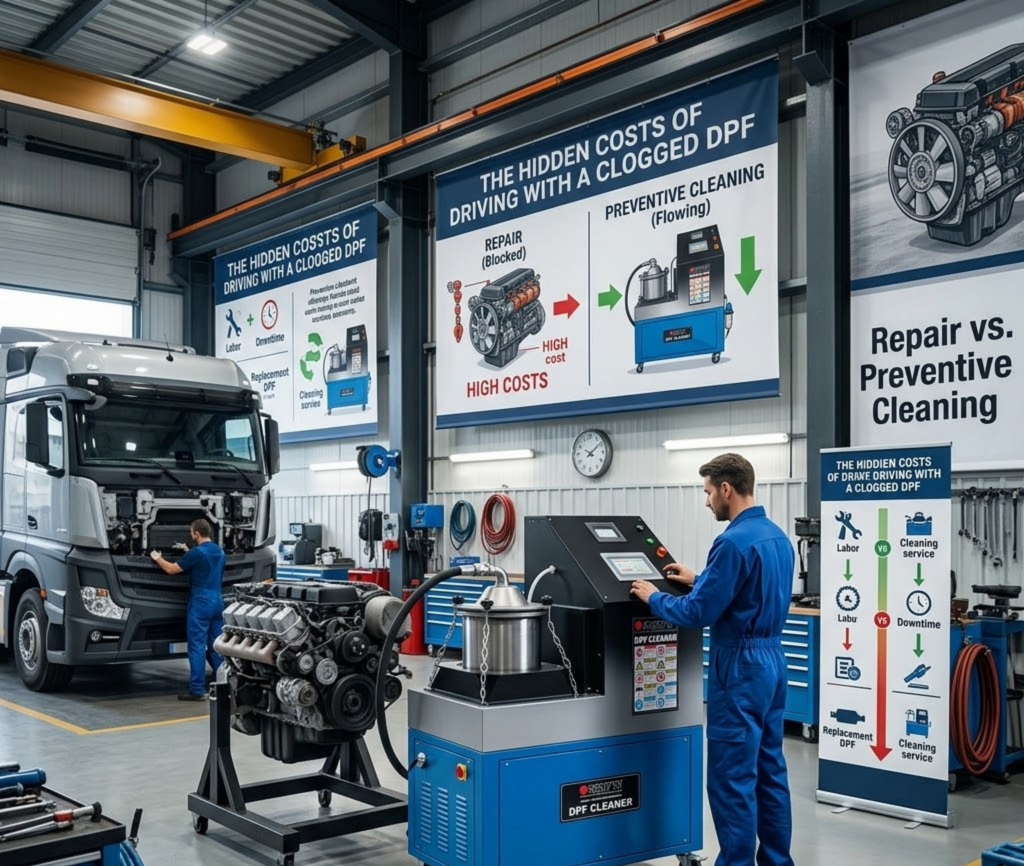
Clogged DPF Repair vs. Preventive Cleaning: Direct Comparison
| Feature | DPF Repair / Replacement | Preventive DPF Cleaning |
| Average Cost | Very High ($2,000 – $6,000) | Very Low ($150 – $400) |
| Downtime | 2 to 5 Days (Part Sourcing) | 3 to 6 Hours |
| Engine Damage Risk | High (Internal Stress & Failures) | Zero Risk |
| Fuel Efficiency | Restored only after replacement | Consistently Maintained |
Preventive DPF Cleaning: The Smart Financial Choice
Utilizing professional cleaning machinery restores up to 98% of the filter’s original flow capacity. Advanced hydro-dynamic flushing technology removes both loose soot and solidified ash deposits without damaging the fragile ceramic catalyst structure inside.
Benefits of Regular DPF Flushing:
- Restores Original Engine Efficiency: Back-pressure drops back to factory baseline levels.
- Optimizes Mileage: Fuel consumption drops back to normal operational parameters.
- Protects Peripheral Components: Extends the working life of your turbocharger, EGR valve, and engine bearings.
- Environmentally Compliant: Reduces vehicle tailpipe emissions and passes MOT/emission inspections easily.
Review official standards via the RAC Guide on Diesel Particulate Filters or relevant transportation authority guidelines.
Stop Wasting Money on Preventable Engine Repairs!
Is your DPF warning light on, or have you noticed a sudden drop in fuel efficiency? Don’t wait for expensive turbo or engine failures. Contact our team today to schedule professional DPF testing and precision cleaning.
👉 [Book Your DPF Cleaning Service Today!]
Frequently Asked Questions (FAQs)
Q1: How often should a DPF be professionally cleaned?
Ideally, every 30,000 km to 50,000 km or whenever you notice frequent regeneration attempts, a professional DPF cleaning is recommended to prevent severe clogging and engine damage.
Q2: Can I clean my DPF by driving on the highway?
Highway driving clears accumulated Soot through passive regeneration, but it cannot remove Ash build-up over time. Removing Ash requires professional hydro-dynamic flushing equipment.
Q3: Is DPF removal or deletion legal?
No, removing or deleting a DPF is illegal as it violates environmental emission standards. It also makes your vehicle non-compliant for insurance claims and pollution certifications.
Q4: What are the early symptoms of a clogged DPF?
Early signs include the DPF warning light glowing on the dashboard, a sudden drop in fuel efficiency, automatic start-stop system deactivation, and sluggish engine acceleration.