Managing a commercial transport fleet requires continuous attention to fuel economy, vehicle uptime, and operational costs. Fuel alone accounts for one of the largest ongoing expenses for fleet operators. When modern diesel trucks begin consuming significantly more fuel while losing engine performance, the root cause is often tucked away inside the exhaust assembly: a clogged Diesel Particulate Filter (DPF). Implementing an effective dpf cleaning solution is one of the fastest, most reliable ways to restore engine performance, recover lost fuel mileage, and extend heavy-duty vehicle lifespans.
As strict emission norms like BS6 (Bharat Stage 6) and Euro VI mandate cleaner diesel exhausts, soot and ash accumulation inside the filter matrix cannot be ignored. Without routine maintenance using a high-performance dpf cleaner or specialized machinery, soot builds up, creating severe engine backpressure.
In this guide, we explore how clogged DPFs destroy fleet mileage, why traditional regeneration methods fall short, and how investing in a modern dpf cleaning machine protects your bottom line.
What is a DPF and Why Does It Clogged?
A Diesel Particulate Filter (DPF) is an exhaust line component engineered to capture harmful diesel particulate matter (soot and ash) before it escapes into the atmosphere.
During normal engine operation, diesel fuel combustion produces fine carbon particles. The DPF traps these particles inside a porous ceramic honeycomb structure. Over time, the filter undergoes automatic “passive” or “active” regeneration, burning off trapped carbon soot at high temperatures and turning it into fine ash.
However, soot burn-off is never 100% complete. Over tens of thousands of kilometers, unburnable metallic ash—originating from engine oil additives, wear metals, and unburnt fuel residue—accumulates inside the filter channels.
Common Causes of Rapid DPF Clogging:
- Frequent Short Trips & Stop-and-Go Driving: Prevents the exhaust from reaching temperatures necessary for passive soot burn-off.
- Faulty Fuel Injectors or EGR Valves: Creates unburnt fuel mixture, producing excessive dark soot.
- Incorrect Engine Oil: Using non-Low SAPS (Sulfated Ash, Phosphorus, Sulfur) engine oil leads to rapid metallic ash buildup.
- Ignored Maintenance Alerts: Delaying scheduled servicing or overriding DPF warning lights on the dashboard.
How a Clogged DPF Destroys Commercial Fleet Fuel Mileage
When a DPF becomes heavily restricted with accumulated ash and soot, the entire engine system suffers. The connection between soot blockage and high fuel consumption comes down to basic fluid dynamics and engine design.
1. Excessive Exhaust Backpressure
An engine functions like a giant air pump. It draws in fresh air, compresses and ignites fuel, and forces out exhaust gas. When the DPF matrix becomes blocked, exhaust gases cannot escape freely. This creates severe exhaust backpressure. The engine must work significantly harder simply to push combustion gases out through the clogged filter channels, burning extra diesel in the process.
2. Frequent Passive and Active Regeneration Cycles
Modern diesel engines detect DPF restriction by measuring differential pressure across the filter inlet and outlet. When pressure rises, the Engine Control Unit (ECU) triggers active regeneration. The ECU injects extra diesel fuel directly into the exhaust stroke or filter inlet to raise temperatures to 600°C+.
If the filter is blocked with non-combustible ash rather than soot, active regeneration fails to clear the obstruction. As a result:
- The ECU triggers active regeneration repeatedly.
- Massive amounts of diesel fuel are burned continuously solely for exhaust heating.
- Engine oil becomes diluted with unburnt diesel fuel, leading to accelerated internal engine wear.
3. Loss of Engine Horsepower and Acceleration
To prevent catastrophic mechanical failure caused by backpressure, modern ECU software places the truck into “Limp Mode.” This restricts engine output, cuts turbocharger boost, and reduces top speeds. Drivers press harder on the accelerator to maintain highway speeds, further degrading overall fuel efficiency.
Comparison: Financial Impact of DPF Maintenance Options
Ignoring DPF health drains fleet profitability rapidly. The table below illustrates the cost and efficiency differences across common filter management strategies:
| Maintenance Strategy | Operational Downtime | Mileage Impact | Longevity & Effectiveness | Overall Cost Impact |
| No Maintenance (Run to Failure) | Days (Unplanned Breakdown) | 10% to 20% Fuel Loss | Causes total filter failure & engine damage | Extremely High (New DPF costs) |
| Forced On-Vehicle Regeneration | 2 – 4 Hours per vehicle | Temporary Improvement | Burns soot, leaves behind harmful ash | Moderate (High fuel waste during burn) |
| Manual Chemical Pour-In Cleaner | 1 – 2 Hours | Minor Short-Term Gain | Cleans loose surface soot; cannot remove deep ash | Low upfront / Ineffective long-term |
| Professional Aqueous DPF Cleaning Machine | 1 – 2 Hours (Off-vehicle) | Fully Restores 100% Factory Mileage | Cleans 98%+ of both soot and deep metallic ash | Lowest Total Cost of Ownership |
Chemical Additives vs. Professional DPF Cleaning Solutions
When fleet managers notice drop-offs in fuel efficiency, they often turn to quick chemical pour-in additives. Understanding the capabilities and limitations of each method is crucial.
Liquid Chemical DPF Cleaner Additives
Chemical additives added directly to the fuel tank lower the combustion temperature required for soot burn-off. While useful as a preventive measure for light-duty urban delivery vans, liquid additives cannot dissolve non-combustible metallic ash. Attempting to flush a completely blocked commercial DPF with chemical sprays while attached to the engine can cause thermal shock, cracking the ceramic core.
Off-Vehicle DPF Cleaning Solution & Flushing
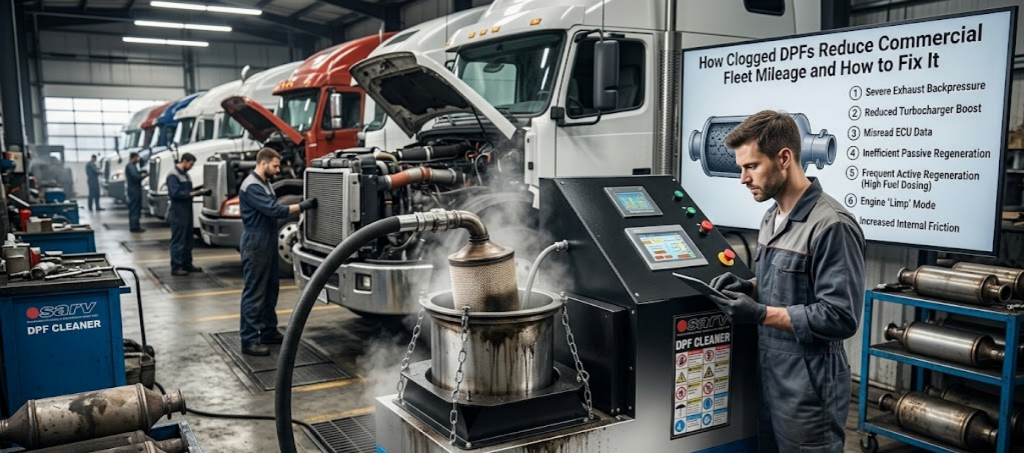
The gold standard for commercial fleet maintenance involves removing the filter housing and processing it through a dedicated dpf cleaning solution and flushing rig.
Using high-flow heated water combined with environmentally safe biodegradable detergents, an industrial dpf cleaning machine forces fluid in reverse flow directions through the micro-channels. This physical pneumatic and hydraulic impulse flushes out packed metallic ash, restoring filter flow capacity to over 98% of original OEM specifications.
The Advantages of In-House DPF Cleaning Machines for Fleet Operators
For commercial fleets operating dozens or hundreds of heavy transport trucks, outsourcing filter maintenance to third-party workshops leads to high turnaround delays and recurring service bills. Purchasing a high-capacity dpf cleaning machine in india or your local market offers complete operational control and rapid return on investment (ROI).
Key Benefits of In-House DPF Cleaning Equipment:
- Eliminate Fleet Downtime: Clean and dry a commercial truck DPF in under two hours directly within your workshop service bay.
- Proven Mileage Recovery: Restoring original exhaust flow yields immediate 5% to 15% fuel efficiency gains across your fleet.
- Avoid Expensive DPF Replacement: A new commercial BS6 / Euro VI DPF assembly can cost thousands of dollars. Routine mechanical cleaning extends original filter life up to 500,000 kilometers or more.
- Real-time Diagnostic Verification: Modern DPF cleaning machines feature integrated backpressure testing units, providing clear before-and-after pressure differential reports to verify clean air flow.
Link to an authoritative environmental or transportation body guide, such as the U.S. EPA Clean Diesel Campaign or regional transport authority guidelines on diesel emission standards.
Step-by-Step Guide to Professional Off-Vehicle DPF Cleaning
To achieve factory-grade flow recovery, fleet workshop technicians follow a standardized off-vehicle cleaning workflow:
[Visual Inspection & Weighing] ➔ [Pneumatic Air Blowout] ➔ [High-Flow Aqueous Flush] ➔ [Hot Air Drying Cycle] ➔ [Backpressure & Flow Testing]
Step 1: Pre-Cleaning Inspection and Backpressure Test
The technician removes the DPF from the exhaust line and visually checks for cracked ceramic monoliths, melted substrate channels, or oil contamination from blown turbochargers. The filter is placed on a test bench to record baseline backpressure (mbar) and dry weight.
Step 2: High-Pressure Air Purge
Compressed air purges loose surface soot from the outlet to inlet direction before fluid application, preventing slurry formation inside the fine honeycomb channels.
Step 3: Aqueous Washing with Specialized DPF Cleaning Solution
The filter is mounted inside the dpf cleaning machine. The unit circulates warm water mixed with an advanced organic dpf cleaning solution. Dynamic water impulses combined with air pressure surges wash away stubborn, hardened ash deposits trapped deep within the inlet walls.
Step 4: High-Temperature Drying
Moisture inside ceramic monoliths can expand rapidly when exposed to hot engine exhaust, causing structural cracks. The cleaning machine executes a controlled hot-air drying cycle (usually 80°C to 120°C) to remove all internal moisture completely.
Step 5: Post-Cleaning Airflow Verification
The dry filter undergoes a final differential pressure test. If backpressure drops back to factory tolerance levels, the DPF is cleared for re-installation on the commercial vehicle.
(Internal Linking Suggestion: Link to your detailed guide on [Step-by-Step Commercial Vehicle Exhaust System Maintenance])
Best Practices to Prevent Premature DPF Blockage
While having access to a reliable dpf cleaning machine in india ensures fast repairs, incorporating preventive fleet management habits minimizes soot accumulation:
- Use Low-SAPS Engine Oil: Low-SAPS lubricants release significantly less ash during normal oil burn-off, preserving filter life.
- Fix Engine Faults Immediately: Leaking injectors, stuck EGR valves, or failing turbo seals overload DPFs with heavy wet soot.
- Train Drivers on Regeneration Protocols: Educate drivers never to interrupt active regeneration cycles when the dashboard indicator is illuminated.
- Schedule Preventive DPF Cleaning: Do not wait for warning lights or Limp Mode. Establish a scheduled DPF flush every 100,000 to 150,000 kilometers for long-haul trucks.
Conclusion
A clogged DPF is a silent profit killer for commercial transport fleets. Elevated exhaust backpressure, constant forced regenerations, and reduced engine power combine to burn thousands of liters of excess diesel fuel every year.
Relying solely on chemical pour-in additives provides temporary relief, but long-term fleet efficiency requires a thorough physical flush to remove non-combustible ash. Investing in a professional dpf cleaning solution and utilizing a modern dpf cleaning machine restores original fuel mileage, prevents engine wear, and keeps your transport operations running smoothly and profitably.
Stop Wasting Fuel! Restore Your Fleet’s Power Today.
Are clogged exhaust filters dragging down your fleet’s mileage and performance? Take control of your maintenance with our heavy-duty cleaning equipment and formulation technology.
Explore our industry-leading [DPF Cleaning Machines] and high-grade [DPF Cleaner Formulations] engineered specifically for commercial truck workshops and fleet operators.
👉 [Contact Our Fleet Maintenance Experts] today for a custom quote or to schedule a live product demonstration!
Frequently Asked Questions (FAQs)
How much fuel can a clogged DPF waste in a commercial truck?
A severely clogged DPF can reduce commercial truck fuel efficiency by 5% to 20%. Increased exhaust backpressure forces the engine to burn significantly more fuel, while frequent active regenerations constantly inject raw fuel directly into the exhaust system.
Can a liquid DPF cleaner completely remove ash from a filter?
No. Chemical fuel additives and liquid spray cleaners can lower soot ignition temperatures to help burn off soft carbon deposits. However, non-combustible metallic ash can only be removed physically by removing the filter and using a specialized aqueous dpf cleaning machine.
How long does it take to clean a commercial DPF using a cleaning machine?
Using an automated aqueous dpf cleaning machine, the complete washing, flushing, and hot-air drying cycle typically takes between 60 to 90 minutes per filter assembly, restoring up to 98% of original air flow capacity.
Why is investing in a DPF cleaning machine in India beneficial for workshop owners?
With strict BS6 emission norms implemented across India, millions of commercial vehicles require regular DPF maintenance. Owning a dedicated dpf cleaning machine in india allows auto workshops and fleet hubs to offer fast, high-margin DPF restoration services locally, eliminating turnaround delays.