Modern diesel engines, especially those compliant with BS6 emission standards, are built to deliver high performance while minimizing harmful exhaust emissions. A critical component making this possible is the DPF Cleaning Service, which captures soot, carbon deposits, and harmful particles before they escape into the environment.
However, over time, these filters naturally clog due to frequent city driving, low speeds, and incomplete combustion. Ignoring a blocked filter can lead to severe engine damage, reduced fuel efficiency, and expensive repair bills. To protect your engine, using an advanced DPF cleaning solution along with specialized servicing is essential. Recognizing the early warning signs that your vehicle needs professional cleaning will save you time, money, and hassle down the road.
What Is a DPF and Why Does It Get Clogged?
A Diesel Particulate Filter (DPF) is integrated directly into the exhaust pipe of modern diesel cars, commercial trucks, and buses. Its main function is to trap solid particles (soot) produced during fuel combustion.
+-----------------------------------------------------------------------+
|                    Engine Exhaust Gas (Soot + Ash)                    |
+-----------------------------------------------------------------------+
                                    |
                                    v
+-----------------------------------------------------------------------+
|                Diesel Particulate Filter (Honey-Comb)                 |
|                   Traps 85%-95% of Soot Particles                      |
+-----------------------------------------------------------------------+
                |                                       |
                v                                       v
   [Normal Operation]                       [Urban Driving / Stop-and-Go]
High Exhaust Temp (>500°C)                 Low Exhaust Temp (<300°C)
Soot Burns Away (Passive Reg.)             Soot & Ash Accumulate Slowly
                |                                       |
                v                                       v
      Filter Stays Clean                      Filter Becomes Blocked
                                                        |
                                                        v
                                        Requires Professional DPF Cleaning
Under normal conditions, when you drive at highway speeds for an extended period, the exhaust temperature rises above $500^\circ\text{C}$. This heat burns off the trapped soot automatically—a process known as passive regeneration.
However, in typical city traffic, short trips, and frequent stop-and-go driving, the exhaust never reaches the high temperature needed for passive regeneration. As a result, soot and non-combustible ash accumulate continuously inside the honeycomb structure, leading to a blocked filter that requires a dedicated DPF Cleaning Servicer or machine-based servicing to clear.
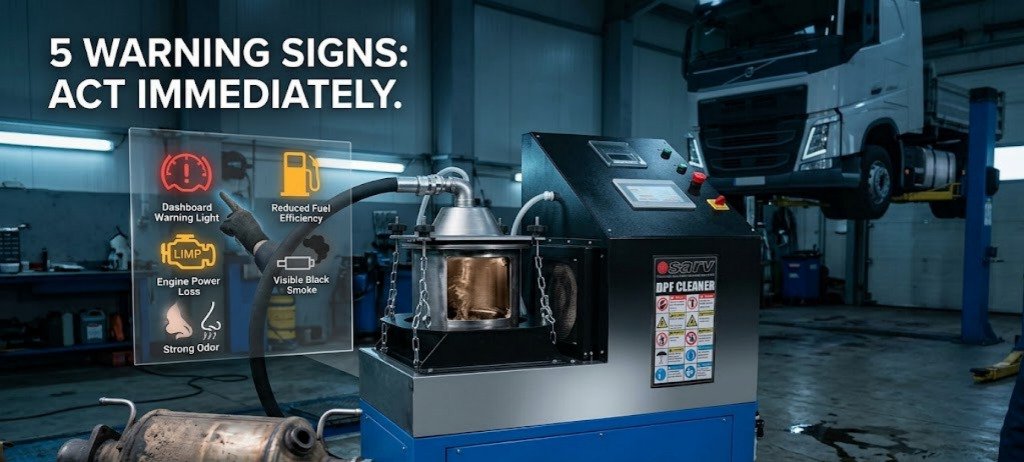
5 Warning Signs Your Vehicle Needs an Immediate DPF Cleaning Service
Recognizing the symptoms of a clogged particulate filter early allows you to address the issue before it leads to severe engine malfunction. Here are the 5 main warning signs to watch out for:
1. The DPF Warning Light Appears on the Dashboard
The most direct indicator of a filter issue is the DPF warning light on your vehicle’s instrument cluster. This light usually resembles an exhaust pipe emitting small dots or a box with dots inside.
+-----------------------------------------------------------------------+
|                  DPF Dashboard Warning Light Modes                    |
+-----------------------------------------------------------------------+
|  Yellow / Amber Icon : Filter soot level elevated; needs regeneration  |
|  Flashing Yellow     : Regeneration failed; active service required   |
|  Red Icon / Limp Mode: Severe blockage; immediate machine cleaning     |
+-----------------------------------------------------------------------+
- Amber/Yellow Light: Indicates that soot levels are rising and the vehicle has been unable to perform an automatic regeneration cycle.
- Flashing Light or Red Light: Indicates that the soot saturation level has exceeded safe limits. At this stage, driving further will cause the engine computer to restrict vehicle power.
When this light turns on and stays on, bringing your vehicle in for professional DPF Cleaning Service is necessary to flush out accumulated carbon without damaging the fragile ceramic core.
2. Sudden Loss of Engine Power and “Limp Mode” Activation
When soot restricts exhaust flow, backpressure builds up rapidly inside the exhaust manifold. This prevents the engine from breathing properly and burning fuel efficiently.
You may notice:
- Sluggish acceleration when pressing the gas pedal.
- Difficulty climbing steep hills or carrying heavy loads.
- The engine entering “Limp Mode” (a safety function that limits engine RPM and speed to prevent catastrophic engine failure).
If your engine suddenly drops power while driving on the highway or in city traffic, a choked exhaust system is often the main culprit. Servicing the vehicle using an effective DPF cleaning solution restores optimal exhaust backpressure and brings back original engine performance.
3. Significant Drop in Fuel Economy
Have you noticed that you are filling up your fuel tank much more frequently than usual, even though your driving habits haven’t changed? A clogged particulate filter directly impacts fuel efficiency.
When a DPF becomes partially blocked, the engine control unit (ECU) attempts to clear it by initiating active regeneration. During active regeneration, the ECU injects extra diesel into the engine cylinders to artificially boost exhaust gas temperatures.
If the filter is too choked with ash for active regeneration to succeed, the ECU keeps repeating this cycle endlessly. This continuous extra fuel injection wastes large amounts of diesel without clearing the blockage, causing your mileage to drop significantly.
4. Strong Odor of Exhaust Fumes or Unusual Smoke
A healthy BS6 diesel vehicle produces minimal visible smoke and very little noticeable exhaust smell. If your filter is heavily contaminated or damaged by excessive backpressure, you will observe distinct physical symptoms:
- Pungent Exhaust Smell: A strong, bitter fuel or soot odor around the vehicle, especially while idling or sitting in traffic.
- Blue or Black Smoke: Dark smoke escaping from the tailpipe under hard acceleration indicates incomplete fuel burn caused by heavy exhaust backpressure.
- Smoke Under the Hood: High exhaust backpressure can force hot exhaust gases backward through gaskets, turbo seals, and EGR valves, causing visible smoke under the bonnet.
5. Automatic Start-Stop System Stops Working
Many modern cars and commercial SUVs come equipped with an automatic Engine Start-Stop feature designed to save fuel while waiting at traffic lights.
Because the start-stop system relies on optimal engine health and electrical stability, the ECU automatically disables it whenever a severe fault is detected—including elevated DPF backpressure. If your vehicle’s auto-start-stop feature suddenly stops engaging despite a fully charged battery, a clogged exhaust filter may be triggering a background fault code.
What Happens If You Ignore a Clogged DPF?
Ignoring DPF warning signs or delaying maintenance leads to severe consequences for your vehicle and your wallet:
| Potential Issue | Impact on Vehicle | Estimated Cost Consequence |
| Turbocharger Failure | Extreme backpressure forces hot exhaust gas into turbo bearing housings, destroying oil seals. | Very High (Turbo Replacement) |
| Engine Oil Dilution | Unburnt fuel from failed active regeneration leaks into the engine oil sump, destroying lubrication properties. | High (Engine Wear / Failure) |
| EGR Valve Damage | Excess soot forces its way back through the EGR system, causing sticky valves and sensor failures. | Moderate to High |
| Cracked Ceramic Core | Extreme heat from prolonged, failed regenerations melts or cracks the filter’s internal core. | Critical (Full Filter Replacement) |
+-----------------------------------------------------------------------+
|                    Neglecting Early DPF Warnings                      |
+-----------------------------------------------------------------------+
                                    |
                                    v
+-----------------------------------------------------------------------+
|         Unburnt Diesel Leaks Past Piston Rings into Oil Sump          |
+-----------------------------------------------------------------------+
                                    |
                                    v
+-----------------------------------------------------------------------+
|              Engine Oil Dilution & Loss of Lubrication                |
+-----------------------------------------------------------------------+
                                    |
                                    v
+-----------------------------------------------------------------------+
|                 Severe Internal Engine & Turbo Damage                 |
+-----------------------------------------------------------------------+
Why Machine-Based DPF Cleaning Is the Safest Solution
When faced with a clogged filter, some vehicle owners attempt quick fixes like spraying harsh domestic chemicals or forcefully blowing compressed air through the filter. These unproven methods often melt or fracture the delicate honeycomb substrate inside.
Professional servicing uses a dedicated DPF cleaning machine combined with a specialized DPF cleaning solution to deliver safe, proven results:
- Bidirectional Liquid Flushing: High-volume, low-pressure liquid flushing washes out trapped ash and hardened soot particles that high heat alone cannot burn away.
- Eco-Friendly Cleaning Fluid: Biodegradable DPF cleaner formulations break down stubborn carbon bonds without damaging the precious metals (platinum, palladium, and rhodium) coating the internal ceramic walls.
- High-Temperature Hot Air Drying: Dedicated drying cycles ensure zero moisture remains inside the filter cells before reinstallation, preventing rapid soot coagulation.
- Verifiable Backpressure Testing: Diagnostic pressure sensors measure airflow resistance before and after cleaning to confirm the filter has been restored to near-factory condition.
To learn more about national vehicle emission testing standards and particulate limits, review the official regulatory updates on the Central Pollution Control Board (CPCB) website.
Preventive Measures to Keep Your DPF Clean Longer
While periodic deep cleaning is necessary as vehicles age, following these driving best practices will extend the interval between service visits:
- Drive on Highways Regularly: Take your vehicle on a 20-to-30-minute highway run at speeds above 60 km/h at least once every two weeks to allow natural passive regeneration to occur.
- Use Low-SAPS Engine Oil: Always use low-ash engine oil specifically formulated for vehicles with DPF systems. Standard engine oil leaves metallic ash behind that permanently clogs filter pores.
- Fill Up with Quality Fuel: Avoid low-grade or contaminated diesel, which causes incomplete combustion and produces excess soot.
- Never Ignore Engine Warning Lights: Address faulty fuel injectors, glowing plugs, or EGR warnings immediately, as engine misfires accelerate filter blockage.
Conclusion
A blocked Diesel Particulate Filter is a manageable maintenance issue when caught early. Recognizing key warning signs—such as dashboard indicators, loss of engine power, reduced fuel economy, strange exhaust odors, and disabled auto-start features—allows you to take action before costly engine damage occurs.
Rather than paying high fees for a full replacement unit, choosing a professional service powered by a quality DPF cleaning solution restores your filter’s efficiency, protects your engine, and keeps your vehicle running cleanly and smoothly.
Is Your Diesel Engine Showing Signs of a Clogged DPF Filter?
Don’t wait for your engine to enter Limp Mode or suffer costly turbo damage! At DPF Clean India, we provide complete, eco-friendly filter restoration using state-of-the-art cleaning technology and specialized cleaning solutions.
- Get Your DPF Serviced Today: Restores up to 98% of original filter airflow.
- Visit Our Website: https://dpfcleanindia.com
Book your vehicle inspection or locate an authorized service center near you today!
Frequently Asked Questions (FAQs)
What is a DPF cleaning solution and how does it help?
A DPF cleaning solution is a specialized chemical liquid designed to break down hardened carbon, soot, and unburnable ash inside a Diesel Particulate Filter. When used inside a professional cleaning machine, it flushes out accumulated deposits without damaging the filter’s ceramic substrate or precious metal coatings.
Can I clear a DPF blockage by driving fast on the highway?
Driving on the highway at sustained speeds can trigger passive regeneration if the filter is only mildly dirty (yellow light on dashboard). However, if the filter is heavily clogged or filled with non-combustible ash, passive regeneration will not work, and professional machine-based cleaning is required.
How much does a DPF cleaning service cost compared to replacement?
Professional DPF cleaning typically costs between 10% and 15% of the price of a brand-new filter unit. Considering a new BS6 filter can cost upwards of ₹80,000 to over ₹2,000,000 depending on the vehicle, machine cleaning offers significant savings.
How long does a professional DPF cleaning service take?
A complete professional service—including differential pressure diagnosis, liquid chemical flushing, and complete hot-air drying—takes approximately 60 to 90 minutes.
Is chemical cleaning safe for the internal ceramic core of the DPF?
Yes, provided the service uses an industry-approved, pH-neutral DPF cleaner inside a dedicated washing system. Safe solutions wash away soot and ash while preserving the catalytic metal coatings inside the filter.