The demand for an effective DPF Cleaning Solution has increased significantly as diesel vehicles become more advanced and emission regulations become stricter. Whether you operate a commercial vehicle workshop, manage a fleet, or service diesel engines regularly, maintaining a clean Diesel Particulate Filter (DPF) is critical for vehicle performance and compliance.
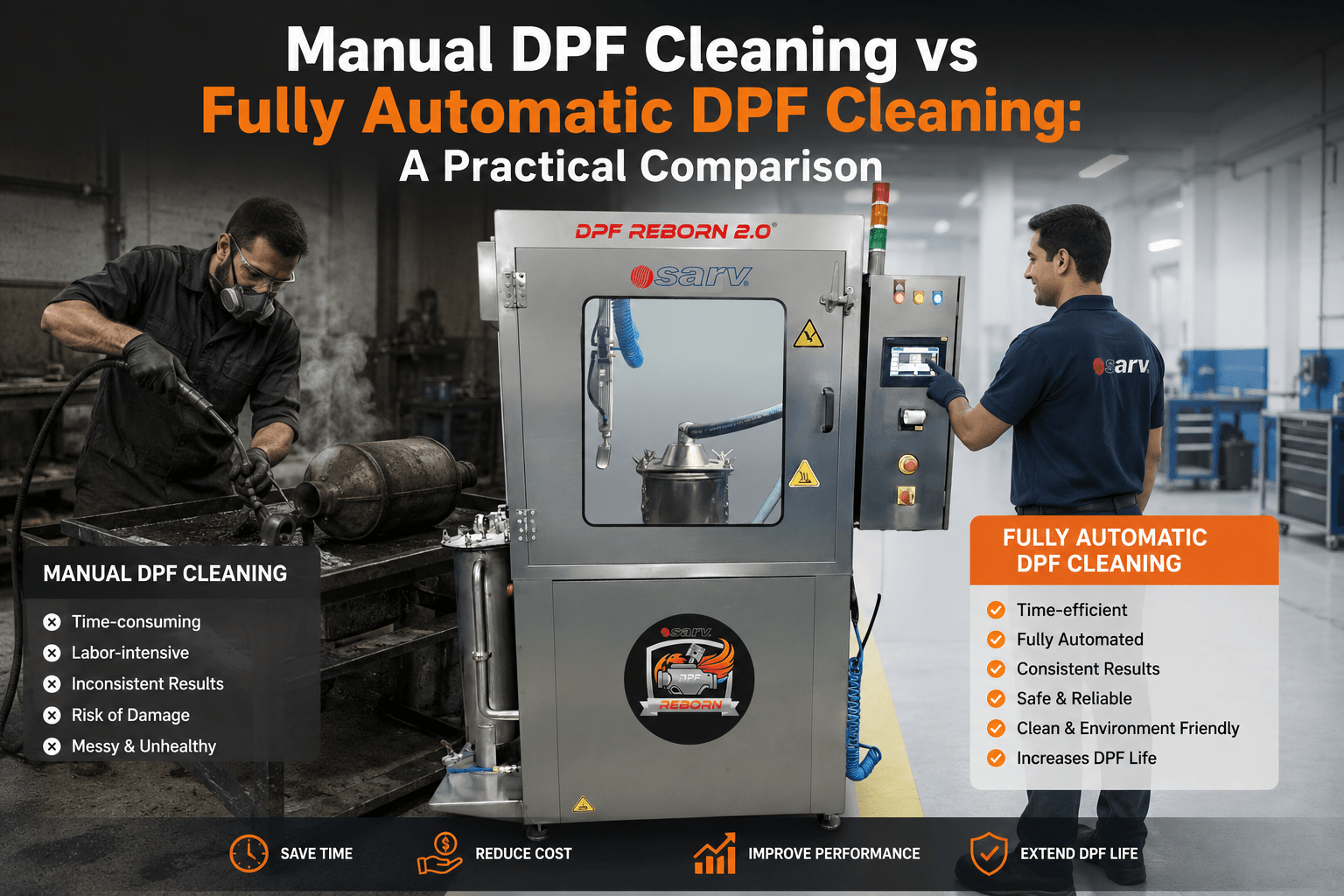
When it comes to DPF cleaning, workshops generally choose between two approaches: manual cleaning and fully automatic cleaning. While both methods aim to remove soot and ash deposits from the filter, the results, efficiency, labor requirements, and profitability can vary dramatically.
In this detailed comparison, we’ll explore the advantages and limitations of both methods, helping workshop owners and fleet operators make informed decisions. We’ll also explain why many service centers are investing in advanced DPF cleaning machines and why the demand for DPF cleaning machine in India solutions continues to grow.
Understanding the Importance of DPF Cleaning
The Diesel Particulate Filter is designed to capture harmful soot particles before they are released into the atmosphere.
Over time, the filter becomes clogged with:
- Soot
- Ash deposits
- Oil residues
- Carbon build-up
When this happens, vehicles may experience:
- Reduced engine performance
- Increased fuel consumption
- DPF warning lights
- Frequent regeneration cycles
- Expensive repair costs
A professional DPF cleaner helps restore airflow and improve engine efficiency without requiring costly filter replacement.
What Is Manual DPF Cleaning?
Manual DPF cleaning involves technicians using basic cleaning equipment, compressed air, chemicals, or water flushing techniques to remove soot deposits from the filter.
Common Manual Cleaning Methods
- Air blasting
- Water washing
- Chemical soaking
- Pressure cleaning
- Manual inspection
This approach has been used for years because of its lower initial investment cost.
Advantages of Manual DPF Cleaning
Lower Initial Cost
Manual cleaning equipment generally requires less upfront investment.
Suitable for Low Cleaning Volumes
Workshops handling occasional DPF jobs may find manual methods adequate initially.
Basic Equipment Requirements
Most workshops already have access to compressed air systems and washing equipment.
Easier Entry Into DPF Services
For small garages, manual cleaning can provide an entry point into DPF maintenance services.
Limitations of Manual DPF Cleaning
Despite its affordability, manual cleaning presents several challenges.
Inconsistent Cleaning Results
Cleaning effectiveness often depends on technician experience.
Incomplete Ash Removal
Many manual methods remove surface soot but fail to clear deep ash deposits.
Longer Service Time
Manual cleaning can take significantly longer than automated systems.
Higher Labor Dependency
The entire process requires continuous technician involvement.
Risk of Filter Damage
Improper pressure levels or cleaning techniques can damage the DPF substrate.
Difficult Quality Control
Achieving consistent results across multiple filters becomes challenging.
What Is Fully Automatic DPF Cleaning?
A fully automatic DPF cleaning machine uses advanced cleaning technology to remove soot and ash deposits efficiently with minimal operator intervention.
The cleaning cycle is controlled electronically and follows a standardized process designed to restore filter performance.
How It Works
Most automatic systems include:
- Automated cleaning cycles
- Airflow testing
- Pressure monitoring
- Controlled cleaning procedures
- Performance verification
This ensures every filter receives a consistent and repeatable cleaning process.
Advantages of Fully Automatic DPF Cleaning
Superior Cleaning Efficiency
Automatic systems remove both soot and deeply embedded ash deposits.
Consistent Results
Every cleaning cycle follows predefined parameters.
Faster Turnaround Time
Workshops can clean more filters each day.
Reduced Technician Dependency
Operators can manage multiple tasks while the machine performs the cleaning process.
Improved Customer Satisfaction
Better cleaning results lead to improved vehicle performance.
Increased Workshop Revenue
Faster processing means more completed jobs.
Manual DPF Cleaning vs Fully Automatic DPF Cleaning
Cleaning Effectiveness
Manual Cleaning
- May remove surface contamination
- Cleaning quality varies
- Ash removal often incomplete
Fully Automatic Cleaning
- Deep internal cleaning
- Thorough ash removal
- Consistent restoration of airflow
Winner: Fully Automatic Cleaning
Time Required Per Filter
Manual Cleaning
- Higher labor hours
- Longer processing times
- Delays during busy periods
Fully Automatic Cleaning
- Faster cleaning cycles
- Increased workshop productivity
- Higher daily throughput
Winner: Fully Automatic Cleaning
Labor Requirements
Manual Cleaning
- Requires continuous technician involvement
- Skilled labor dependency
Fully Automatic Cleaning
- Minimal operator supervision
- Better workforce utilization
Winner: Fully Automatic Cleaning
Cleaning Consistency
Manual Cleaning
Results vary depending on:
- Technician skill
- Cleaning method
- Time spent on the filter
Fully Automatic Cleaning
- Standardized process
- Repeatable results
- Quality assurance
Winner: Fully Automatic Cleaning
Risk of Damage
Manual Cleaning
Improper cleaning pressure may damage filter components.
Fully Automatic Cleaning
Controlled cleaning parameters reduce the risk of damage.
Winner: Fully Automatic Cleaning
Why Fleet Operators Prefer Professional DPF Cleaning Solutions
Fleet downtime directly impacts profitability.
When vehicles remain off the road due to DPF issues:
- Delivery schedules are affected
- Fuel costs increase
- Maintenance expenses rise
Professional DPF Cleaning Solution systems help fleet managers:
- Extend filter life
- Reduce replacement costs
- Improve fuel efficiency
- Minimize vehicle downtime
Why Workshops Are Switching to Fully Automatic DPF Cleaning Machines
The commercial vehicle industry is expanding rapidly.
As more diesel vehicles require maintenance, workshops need scalable solutions.
Key Business Benefits
More Jobs Per Day
Automated systems increase service capacity.
Better Profit Margins
Higher efficiency means improved profitability.
Professional Service Offering
Advanced equipment builds customer confidence.
Competitive Advantage
Workshops with automated cleaning capabilities often attract fleet contracts.
The Growing Demand for DPF Cleaning Machines in India
India’s commercial vehicle sector continues to grow.
As emission standards become stricter, DPF maintenance is becoming an essential service.
This has created strong demand for:
- Professional DPF cleaning services
- Advanced DPF cleaning equipment
- Workshop automation solutions
Investing in a modern DPF cleaning machine in India allows workshops to stay ahead of industry demand while generating a new revenue stream.
Cost Comparison: Manual vs Automatic DPF Cleaning
Manual Cleaning
Pros:
- Lower initial investment
Cons:
- Higher labor costs
- Lower productivity
- Inconsistent results
Fully Automatic Cleaning
Pros:
- Faster service
- More jobs completed
- Better customer satisfaction
- Increased revenue potential
Cons:
- Higher initial investment
However, most workshops recover their investment through increased service volume and recurring customer demand.
Which DPF Cleaning Method Is Right for Your Workshop?
The answer depends on your business goals.
Manual cleaning may work for very low service volumes.
However, if you want:
- Higher productivity
- Consistent results
- Better profitability
- Fleet customer acquisition
- Long-term business growth
A fully automatic DPF cleaner offers significant advantages.
Conclusion
Both manual and fully automatic cleaning methods serve the same purpose, but the difference lies in efficiency, consistency, and profitability.
While manual cleaning may seem cost-effective initially, fully automatic systems provide superior cleaning performance, reduced labor requirements, faster turnaround times, and higher customer satisfaction.
As demand for professional DPF Cleaning Solution services continues to increase, workshops that invest in advanced DPF cleaning machines position themselves for long-term growth and greater profitability.
If your goal is to deliver better results while increasing workshop revenue, a fully automatic DPF cleaning system is the smarter investment.
Knowledge and the data needed to achieve sustainability –
- Automotive Research Association of India (ARAI)
- Society of Automotive Engineers (SAE)
- U.S. Environmental Protection Agency (EPA)
- European Environment Agency (EEA)
Upgrade Your Workshop With a Fully Automatic DPF Cleaning Machine
Still relying on manual cleaning methods? Discover how a fully automatic DPF Cleaning Machine can help your workshop:
✅ Increase Daily Job Capacity
✅ Deliver Consistent Cleaning Results
✅ Reduce Labor Dependency
✅ Improve Customer Satisfaction
✅ Generate Additional Revenue
📞 Contact our experts today for a FREE consultation, product demo, and ROI calculation.
FAQs
1. What is the difference between manual and automatic DPF cleaning?
Manual cleaning relies on technician effort, while automatic cleaning uses controlled machine processes for consistent results.
2. Which method removes ash more effectively?
Fully automatic DPF cleaning systems generally provide better ash removal and airflow restoration.
3. Is a DPF cleaning machine worth the investment?
Yes. Many workshops recover their investment through increased service volume and improved productivity.
4. How long does DPF cleaning take?
Automatic systems usually provide faster turnaround compared to manual methods.
5. Can DPF cleaning extend filter life?
Yes. Regular professional cleaning helps prevent premature DPF replacement.
6. Why are workshops investing in DPF cleaning machines in India?
Growing diesel vehicle populations and stricter emission standards have increased demand for professional DPF services.