Diesel Particulate Filters (DPF) play a crucial role in modern diesel engines by capturing harmful soot and ash before it exits the exhaust pipe. Over time, these filters get clogged, leading to reduced fuel efficiency, loss of engine power, and costly repairs. To maintain peak vehicle performance, choosing the right DPF cleaning solution is essential.
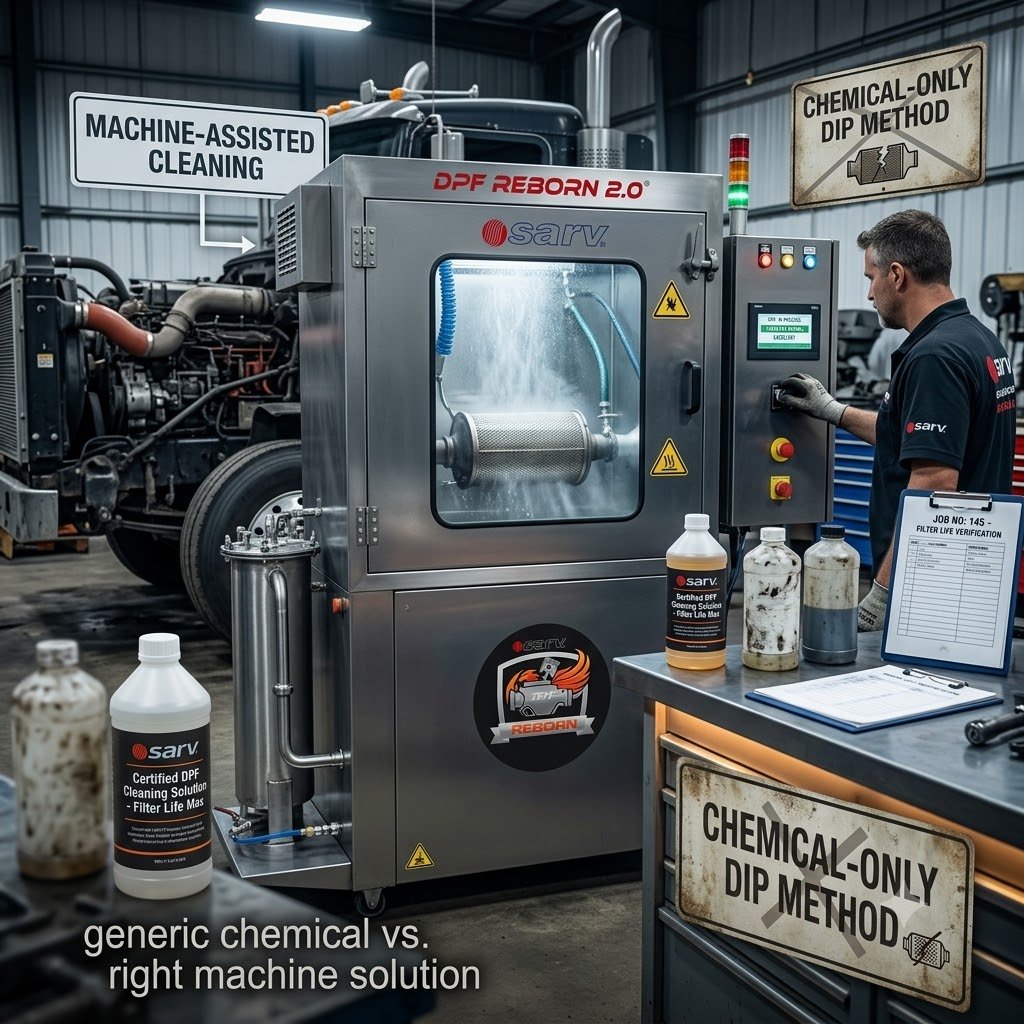
While some fleet owners and technicians rely purely on liquid chemical washes, others invest in advanced machine-assisted cleaning methods. Understanding the differences between chemical treatments and automated equipment will help you preserve filter life, minimize downtime, and make smarter maintenance investments.
What Is a DPF and Why Does It Get Clogged?
A Diesel Particulate Filter is a porous ceramic structure designed to trap soot particles produced during diesel combustion.
Exhaust Gases + Soot  --->  [ DPF Honeycomb Mesh ]  --->  Cleaned Exhaust
                                     │
                             (Accumulates Ash/Soot)
During normal driving, your vehicle performs passive or active regeneration to burn off accumulated soot at high temperatures. However, regeneration cannot burn off non-combustible ash, unburnt oil residues, or heavy soot caused by short trips and stop-and-go driving. When ash and soot build up beyond operational levels, manual or mechanical intervention becomes necessary.
Understanding DPF Cleaning Methods
Restoring a clogged filter generally involves two primary approaches: liquid chemical treatments and specialized mechanical washing equipment.
Chemical DPF Cleaning (On-Vehicle & Dip Treatments)
Chemical cleaning involves spraying a dedicated fluid into the filter via sensor ports or soaking an uninstalled filter in a chemical bath.
- Direct Soaking: The filter is removed and submerged in a concentrated cleaning solution to dissolve carbon build-up.
- In-Situ Sprays: A aerosol or liquid cleaner is injected directly into the filter while attached to the engine to loosen light soot deposits.
- Softeners & Solvents: Solvents break down heavy oil bonds holding carbon together, making it easier to flush out.
Machine-Based DPF Cleaning (Automated Systems)
Automated cleaning relies on dedicated workshop equipment designed to physically force trapped ash out of the honeycomb core.
- Pneumatic / Air-Blowing Machines: High-pressure air blasts loose dust and light soot in reverse flow.
- Hydrodynamic Cleaning Machines: Water and specialized cleaning additives pass through the filter under controlled pressure pulses to remove non-combustible ash.
- Thermal Kilns & Baking: High-heat ovens bake trapped soot into fine ash before it is flushed out.
Comparing Chemicals vs. Machines
| Feature / Metric | Chemical Cleaning Alone | Machine-Assisted Cleaning |
| Ash Removal Capacity | Low (Solvents dissolve soot, not mineral ash) | High (Flushes both soot and dense ash) |
| Filter Restoration Level | 50% – 70% | Up to 98% |
| Risk of Ceramic Damage | Moderate (Harsh chemicals can erode washcoat) | Low (Controlled fluid flow and pressure) |
| Turnaround Time | Fast (In-situ applications) | Moderate (Requires filter removal & machine cycle) |
| Long-Term Cost Efficiency | Low (Requires frequent repeated treatments) | High (Extends filter replacement cycles) |
Why Combining Solution and Machines Yields Best Results
The debate between chemical solutions and cleaning machines isn’t necessarily about choosing one over the other. The most effective workshop results come from combining both technologies.
Using a high-grade chemical DPF cleaner inside a modern DPF cleaning machine provides a double-action restoration process:
- Chemical Action: Solves oil-bound carbon bonds, softening stubborn deposits inside the narrow ceramic channels.
- Mechanical Action: Controlled water pulses and air pressure physically sweep the loosened soot and dense ash out of the filter core.
This dual technique prevents thermal shock, protects the precious metal coatings (platinum and palladium) inside the catalytic layers, and restores airflow to near-factory conditions.
Regional Industry Spotlight: DPF Maintenance Demand
As emission standards become stricter globally, commercial vehicle operators, logistics fleets, and independent workshops require reliable cleaning infrastructure.
Investing in a commercial DPF cleaning machine in India and other rapidly growing transport hubs has become a lucrative business model for auto service centers. With heavy duty trucks, buses, and diesel passenger cars covering massive daily distances, having access to fast, local filter restoration prevents expensive component replacements and keeps fleets compliant with strict environmental laws.
Step-by-Step Professional Cleaning Process
Proper DPF cleaning follows a strict multi-step protocol to prevent substrate cracking and ensure complete restoration:
1.Inspection & Backpressure Testing:Initial Assessment.
Inspect the ceramic honeycomb with an endoscope for physical cracks or melting. Measure baseline airflow resistance using a differential pressure tester.
2.Chemical Pre-Treatment:Softening Carbon.
Apply a specialized bio-degradable cleaning solution into the filter inlets to break down sticky hydrocarbons and soot binders.
3.Machine Wash & Flush:Hydrodynamic Processing.
Mount the filter into the automated flushing equipment. Run high-volume water and air pulses through the filter in reverse flow to clear channels.
4.Drying & Post-Testing:Final Verification.
Dry the filter using warm air to remove all moisture. Re-test backpressure to verify airflow restoration against OEM benchmarks.
Best Practices to Protect Filter Life
- Use Low-SAPS Engine Oil: Low Ash, Sulfur, and Phosphorus oils significantly reduce non-combustible residue accumulation.
- Avoid Harsh Industrial Acid Baths: Strong acids can strip delicate washcoats inside the catalyst, rendering the unit ineffective.
- Perform Periodic Airflow Diagnostics: Monitor backpressure readings during routine maintenance to catch clogging early.
- Service Injectors and Turbochargers: Leaking fuel injectors or blown turbo seals feed excessive unburnt oil into the exhaust, rapidly clogging the filter.
For deeper technical guidance on exhaust filtration and emission control systems, explore resources provided by DieselNet’s Technical Guides and learn about standard vehicle emission limits via the U.S. Environmental Protection Agency (EPA).
Selecting the right DPF cleaning solution and equipment strategy directly impacts your vehicle’s engine performance, fuel economy, and long-term operating costs. While chemical treatments offer quick surface fixes, pairing quality cleaning agents with professional cleaning equipment ensures complete ash removal and maximum filter lifespan.
Ready to upgrade your workshop capabilities or restore your fleet’s performance?
Contact our technical experts today to explore our range of eco-friendly cleaning solutions and advanced automated cleaning equipment tailored for your service center.
Frequently Asked Questions (FAQs)
Q1: Can I clean a DPF using only chemical sprays?
A: Chemical sprays can loosen light soot and clear minor surface blockages, but they cannot remove non-combustible ash trapped deep inside the ceramic honeycomb. Full restoration requires flushing equipment.
Q2: How often should a DPF be professionally cleaned?
A: For commercial fleets and heavy-duty vehicles, professional machine cleaning is recommended every 100,000 to 150,000 kilometers, or whenever passive regeneration fails to clear backpressure codes.
Q3: Will machine cleaning damage the internal filter core?
A: No, modern hydrodynamic machines use controlled liquid volume and pneumatic pressure pulses designed specifically to preserve delicate ceramic walls while safely removing trapped debris.
Q4: Is it cheaper to clean a DPF or replace it?
A: Professional cleaning typically costs a fraction of a new OEM replacement filter while restoring up to 98% of original exhaust flow.