Modern diesel vehicles are designed to meet strict emission regulations, making Diesel Particulate Filters (DPFs) an essential component of the exhaust system. While DPFs effectively capture harmful soot particles, they require regular cleaning through a process called regeneration.
Many workshop owners, fleet operators, and vehicle owners hear terms like active regeneration, passive regeneration, and forced regeneration but may not fully understand what they mean. Knowing how these processes work can help prevent costly repairs, reduce vehicle downtime, and improve engine efficiency.
A reliable DPF cleaning solution combined with professional maintenance can significantly improve DPF performance and extend its service life. In this guide, we’ll explain DPF regeneration in simple terms and discuss when a DPF cleaning machine, DPF cleaner, or professional DPF cleaning service becomes necessary.
What Is a DPF?
A Diesel Particulate Filter (DPF) is a device installed in diesel vehicles to trap soot and particulate matter generated during combustion.
The primary purpose of a DPF is to:
- Reduce harmful emissions
- Meet environmental standards
- Improve air quality
- Comply with government regulations
As soot accumulates inside the filter, it must be removed periodically. This cleaning process is known as regeneration.
What Is DPF Regeneration?
DPF regeneration is the process of burning accumulated soot inside the filter and converting it into a small amount of ash.
Without regeneration:
- The filter becomes clogged
- Engine performance drops
- Fuel consumption increases
- Warning lights appear
- Vehicle downtime increases
There are three main types of DPF regeneration:
- Passive Regeneration
- Active Regeneration
- Forced Regeneration
Let’s understand each one in detail.
Passive Regeneration
What Is Passive Regeneration?
Passive DPF regeneration occurs naturally when the exhaust temperature becomes high enough to burn soot particles without any intervention.
Typically, soot burns at temperatures above 350°C–500°C.
When a vehicle operates continuously on highways or under heavy loads, exhaust temperatures rise sufficiently to clean the DPF automatically.
How Passive DPF regeneration Works
The process is simple:
- Engine produces soot.
- DPF traps the soot.
- Exhaust temperatures increase during normal driving.
- Trapped soot burns away naturally.
- Filter remains clean and functional.
Benefits of Passive DPF regeneration
Low Maintenance
No additional fuel or special procedures are required.
Reduced Downtime
The cleaning process occurs while driving.
Better Fuel Efficiency
The DPF remains less restricted, improving engine performance.
Longer DPF Life
Regular passive DPF regeneration reduces severe clogging.
Limitations of Passive Regeneration
Passive regeneration may not occur effectively if vehicles:
- Operate mainly in city traffic
- Frequently idle
- Travel short distances
- Run at low engine loads
These operating conditions often require active or forced regeneration.
Active Regeneration
What Is Active Regeneration?
When the engine control unit (ECU) detects excessive soot accumulation, it initiates active regeneration automatically.
The vehicle increases exhaust temperatures by injecting extra fuel into the combustion process.
This raises DPF temperatures to approximately 600°C, allowing trapped soot to burn off.
How Active Regeneration Works
The process generally follows these steps:
Step 1: Monitoring Soot Levels
Sensors monitor pressure and soot accumulation inside the DPF.
Step 2: ECU Activation
When soot reaches a specific threshold, the ECU triggers regeneration.
Step 3: Temperature Increase
Additional fuel injection raises exhaust temperature.
Step 4: Soot Burn-Off
The accumulated soot burns into ash.
Step 5: System Reset
The DPF returns to normal operating conditions.
Signs Active Regeneration Is Occurring
Drivers may notice:
- Increased engine RPM
- Slightly higher fuel consumption
- Cooling fans running continuously
- Temporary burning smell
- Hot exhaust temperatures
These are usually normal signs of regeneration.
Benefits of Active Regeneration
Automatic Process
Requires minimal driver involvement.
Effective Cleaning
Removes significant soot accumulation.
Prevents Blockages
Keeps the filter functioning efficiently.
Drawbacks of Active Regeneration
Increased Fuel Usage
Additional fuel is required to raise exhaust temperatures.
Interruptions Can Cause Problems
If the engine is turned off during regeneration, soot accumulation may continue.
Not Always Sufficient
Repeated interrupted regenerations may eventually require professional DPF cleaning.
Forced Regeneration
What Is Forced Regeneration?
Forced regeneration is a workshop-based procedure used when soot accumulation becomes too high for passive or active regeneration to work effectively.
A diagnostic tool initiates regeneration while the vehicle remains stationary.
This process is usually performed by trained technicians.
When Is Forced Regeneration Needed?
Forced regeneration becomes necessary when:
- DPF warning lights remain on
- Vehicle enters limp mode
- Engine power decreases
- Active regeneration repeatedly fails
- Excessive soot accumulation occurs
How Forced Regeneration Works
Vehicle Inspection
Technicians check the DPF condition and sensor readings.
Diagnostic Equipment Connection
A scan tool communicates with the ECU.
Controlled Regeneration
The system increases exhaust temperature under controlled conditions.
Soot Removal
Accumulated soot burns away.
Performance Verification
The technician confirms successful regeneration.
Benefits of Forced Regeneration
- Restores DPF performance
- Prevents filter replacement
- Reduces vehicle downtime
- Clears warning lights
Limitations of Forced Regeneration
Forced regeneration may not solve issues caused by:
- Excessive ash buildup
- Damaged filters
- Cracked substrates
- Severe contamination
In such cases, professional DPF cleaning becomes necessary.
Why Regeneration Alone Is Not Always Enough
Many vehicle owners assume regeneration completely cleans the DPF.
However, regeneration only removes soot.
It does not remove:
- Ash deposits
- Oil contamination
- Additive residues
- Metal particles
Over time, these materials accumulate and reduce DPF efficiency.
This is where a professional DPF cleaning solution and specialized cleaning equipment become important.
The Role of a DPF Cleaning Solution
A high-quality DPF cleaning solution is designed to remove stubborn contaminants that regeneration cannot eliminate.
Benefits include:
- Deep cleaning of filter channels
- Improved airflow
- Reduced exhaust backpressure
- Better fuel economy
- Extended DPF lifespan
For workshops, using the right cleaning solution can improve cleaning results and customer satisfaction.
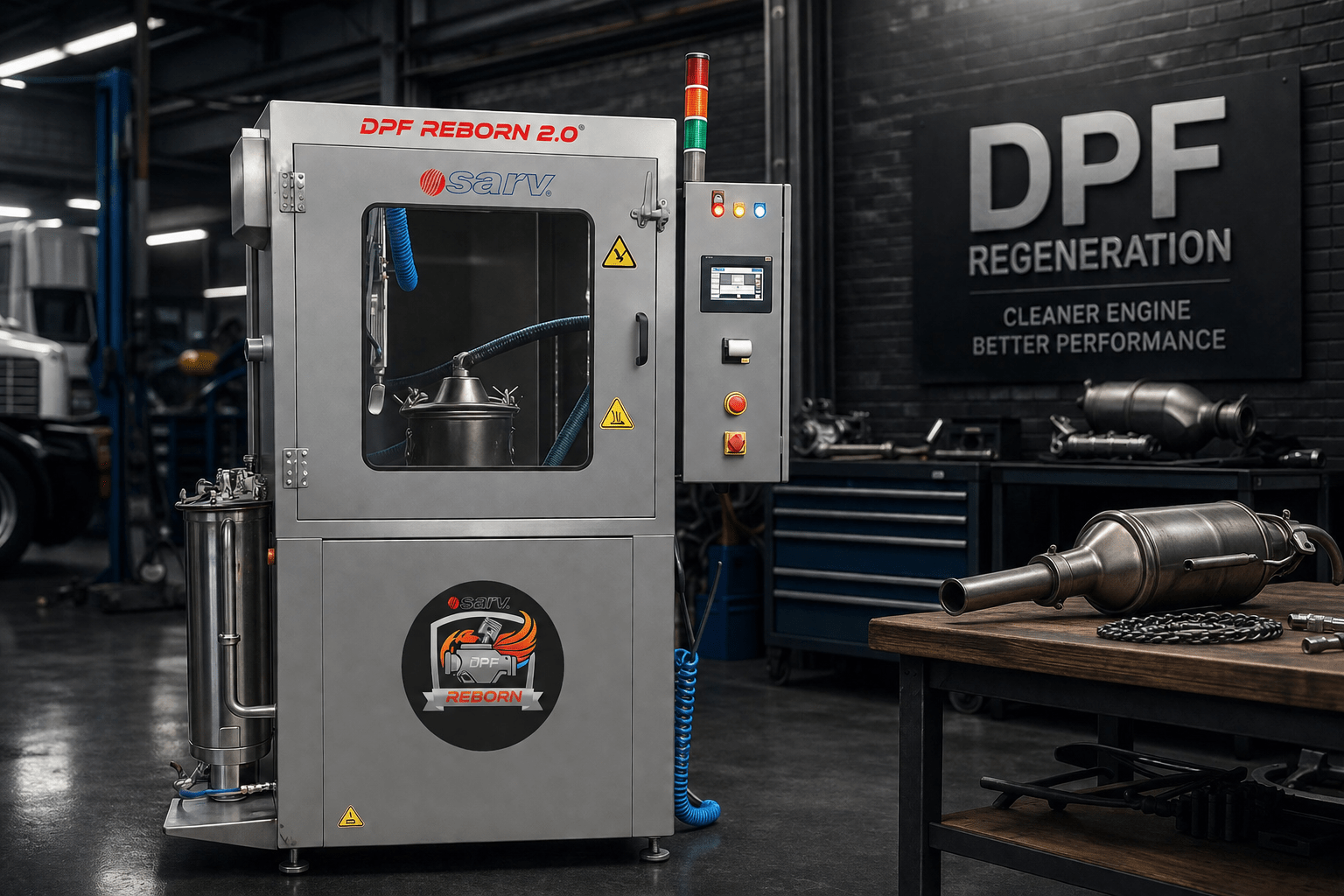
Why Workshops Need a DPF Cleaning Machine
As diesel vehicles continue to dominate commercial transportation, demand for professional DPF services is growing.
A modern DPF cleaning machine helps workshops:
Increase Service Revenue
Offer specialized DPF maintenance services.
Improve Cleaning Efficiency
Achieve more consistent cleaning results.
Reduce Manual Labor
Automated systems simplify the cleaning process.
Serve Fleet Customers
Fleet operators require regular DPF maintenance.
Benefits of Investing in a DPF Cleaning Machine in India
Demand for DPF cleaning machine in India is increasing because:
- BS6 diesel vehicles require efficient DPF maintenance
- Fleet operators seek cost-effective solutions
- Replacement DPFs are expensive
- Environmental regulations continue to tighten
Workshops equipped with advanced DPF cleaning equipment gain a competitive advantage in the market.
Common Signs a DPF Needs Cleaning
Watch for these warning signs:
- DPF warning light
- Reduced engine performance
- Increased fuel consumption
- Excessive regeneration frequency
- Black exhaust smoke
- Limp mode activation
Ignoring these symptoms can lead to expensive repairs or DPF replacement.
Best Practices for Maintaining a DPF
Drive at Suitable Speeds
Regular highway driving encourages passive regeneration.
Avoid Excessive Idling
Long idle periods increase soot accumulation.
Use Quality Fuel
Better fuel quality reduces particulate formation.
Monitor Warning Lights
Address DPF alerts promptly.
Schedule Professional Cleaning
Periodic maintenance with a DPF cleaner and cleaning machine keeps filters operating efficiently.
The Future of DPF Maintenance
As emission standards become stricter worldwide, DPF systems will play an increasingly important role.
Workshops equipped with advanced cleaning technology and professional DPF cleaning solutions will be better positioned to support:
- Commercial fleets
- Logistics companies
- Bus operators
- Construction equipment owners
- Independent diesel vehicle operators
Understanding regeneration processes is the first step toward maintaining healthy DPF systems and avoiding costly failures.
Improve DPF Performance with Professional Cleaning Solutions
Looking for a reliable DPF cleaning solution or advanced DPF cleaning machine in India? Investing in professional DPF maintenance equipment helps workshops improve service quality, reduce vehicle downtime, and increase profitability.
Explore our range of DPF cleaning machines and solutions today to deliver faster, safer, and more effective DPF cleaning services.
Relevant authority sources:
International Council on Clean Transportation (ICCT)6. FAQs
Ministry of Road Transport & Highways
1. What is DPF regeneration?
DPF regeneration is the process of burning accumulated soot inside a diesel particulate filter to restore normal airflow and performance.
2. What is passive regeneration?
Passive regeneration occurs naturally when exhaust temperatures become high enough to burn soot during normal driving conditions.
3. What is active regeneration?
Active regeneration is automatically initiated by the vehicle’s ECU when soot levels become excessive, increasing exhaust temperatures to clean the DPF.
4. What is forced regeneration?
Forced regeneration is a workshop-controlled cleaning process performed using diagnostic equipment when normal regeneration methods fail.
5. Does regeneration remove all contaminants from a DPF?
No. Regeneration removes soot but does not eliminate ash, oil deposits, or other contaminants.
6. Why is a DPF cleaning solution important?
A DPF cleaning solution removes stubborn deposits and ash buildup that regeneration cannot remove.
7. How often should a DPF be professionally cleaned?
Cleaning intervals depend on vehicle usage, but commercial vehicles often benefit from periodic professional DPF cleaning.
8. What are signs of a clogged DPF?
Common signs include warning lights, reduced engine power, increased fuel consumption, and frequent regeneration cycles.
9. What is the benefit of a DPF cleaning machine?
A DPF cleaning machine provides efficient, repeatable, and thorough cleaning while reducing labor and downtime.
10. Why is demand for DPF cleaning machines in India increasing?
The rise of BS6 diesel vehicles and stricter emission regulations have increased the need for professional DPF maintenance solutions.