Commercial fleets are the backbone of logistics, transportation, and industrial operations. From trucks and buses to construction vehicles, diesel-powered fleets keep businesses moving every day. However, modern diesel engines equipped with Diesel Particulate Filters (DPF) require proper maintenance to perform efficiently. This is where a professional DPF cleaning solution becomes essential.
A DPF system helps reduce harmful emissions by trapping soot and particulate matter produced during diesel combustion. Over time, this soot builds up inside the filter, reducing engine efficiency and increasing maintenance costs. Without proper cleaning and maintenance, fleets may face downtime, poor fuel economy, and expensive repairs.
In this detailed guide, we will explain why DPF maintenance is important for commercial fleets, common DPF issues, warning signs, maintenance best practices, and how using the right DPF cleaning solution can improve vehicle performance and fleet profitability.
What Is a DPF System?
A Diesel Particulate Filter (DPF) is an emission control device installed in modern diesel vehicles. Its main purpose is to capture soot particles from exhaust gases before they are released into the environment.
DPF systems are especially important in BS6 and Euro 6 commercial vehicles because emission standards have become stricter worldwide.
Main Functions of a DPF
- Captures harmful soot particles
- Reduces air pollution
- Helps vehicles comply with emission regulations
- Improves environmental sustainability
- Supports cleaner diesel engine performance
As soot accumulates inside the filter, regular regeneration or cleaning is required to maintain proper airflow and engine performance.
Why DPF Maintenance Matters for Commercial Fleets
Fleet vehicles often operate for long hours and cover large distances. This continuous operation causes soot accumulation to happen faster than in personal vehicles.
Ignoring DPF maintenance can lead to serious operational problems.
1. Reduces Vehicle Downtime
A blocked DPF can force vehicles into limp mode or even shut down the engine system. This can disrupt deliveries, transportation schedules, and business operations.
Regular DPF maintenance ensures:
- Better vehicle reliability
- Reduced unexpected breakdowns
- Improved fleet uptime
For logistics businesses, downtime directly affects profitability.
2. Improves Fuel Efficiency
When a DPF becomes clogged, the engine works harder to push exhaust gases through the filter. This increases fuel consumption.
Using a professional DPF cleaning solution helps:
- Restore proper exhaust flow
- Reduce engine load
- Improve fuel economy
For large fleets, even small fuel savings can significantly reduce operating costs.
3. Extends Engine Life
Excessive backpressure caused by a blocked DPF can damage engine components such as:
- Turbochargers
- EGR systems
- Exhaust sensors
- Fuel injectors
Proper maintenance prevents unnecessary strain on the engine and helps extend vehicle lifespan.
4. Supports BS6 Compliance
Modern emission norms require diesel vehicles to maintain lower emission levels. Poorly maintained DPF systems can increase emissions and lead to compliance issues.
Regular cleaning helps fleets:
- Meet environmental regulations
- Avoid penalties
- Maintain roadworthiness standards
This is especially important for commercial transport operators and fleet owners.
Common DPF Problems in Commercial Vehicles
Commercial fleets face several DPF-related challenges due to continuous usage and harsh operating conditions.
Frequent Short Trips
Vehicles operating in city traffic often fail to achieve the temperatures needed for automatic DPF regeneration.
This leads to:
- Incomplete soot burning
- Rapid soot accumulation
- Frequent warning lights
Poor Fuel Quality
Low-quality diesel fuel can create excessive soot deposits inside the DPF system.
Consequences include:
- Faster clogging
- Reduced engine efficiency
- Increased maintenance frequency
Delayed Maintenance
Ignoring DPF warning signs can turn a simple cleaning process into a costly replacement.
Many fleet operators delay maintenance until:
- Engine performance drops significantly
- Warning lights appear repeatedly
- Vehicles enter limp mode
Preventive maintenance is always more cost-effective than major repairs.
Signs Your Fleet Vehicles Need DPF Cleaning
Recognizing early warning signs can help prevent serious engine issues.
Warning Indicators Include:
Reduced Engine Power
Vehicles may feel sluggish or slow during acceleration.
Increased Fuel Consumption
A clogged filter forces the engine to burn more fuel.
DPF Warning Light
Dashboard indicators signal soot accumulation inside the filter.
Excessive Exhaust Smoke
Poor filtration may cause visible black smoke emissions.
Frequent Regeneration Cycles
Repeated regeneration indicates the filter is overloaded.
Engine Limp Mode
Vehicles may automatically reduce performance to protect the engine.
When these symptoms appear, using a professional DPF cleaning solution becomes necessary.
How Professional DPF Cleaning Solutions Help
Modern DPF cleaning systems are designed to restore filters to near-original condition using advanced cleaning technology.
Professional cleaning offers better results compared to temporary manual methods.
Benefits of Professional DPF Cleaning
Deep Soot Removal
Advanced cleaning machines remove:
- Carbon deposits
- Ash accumulation
- Oil residue
- Hardened soot particles
This improves filter airflow and efficiency.
Restores OEM-Level Performance
Professional DPF cleaning helps restore:
- Exhaust flow
- Engine response
- Fuel efficiency
- Regeneration performance
Many workshops achieve up to 99% cleaning efficiency using advanced systems.
Reduces Replacement Costs
Replacing DPF filters can be expensive for fleet operators.
Regular cleaning:
- Extends filter lifespan
- Delays replacement needs
- Lowers maintenance costs
Faster Workshop Operations
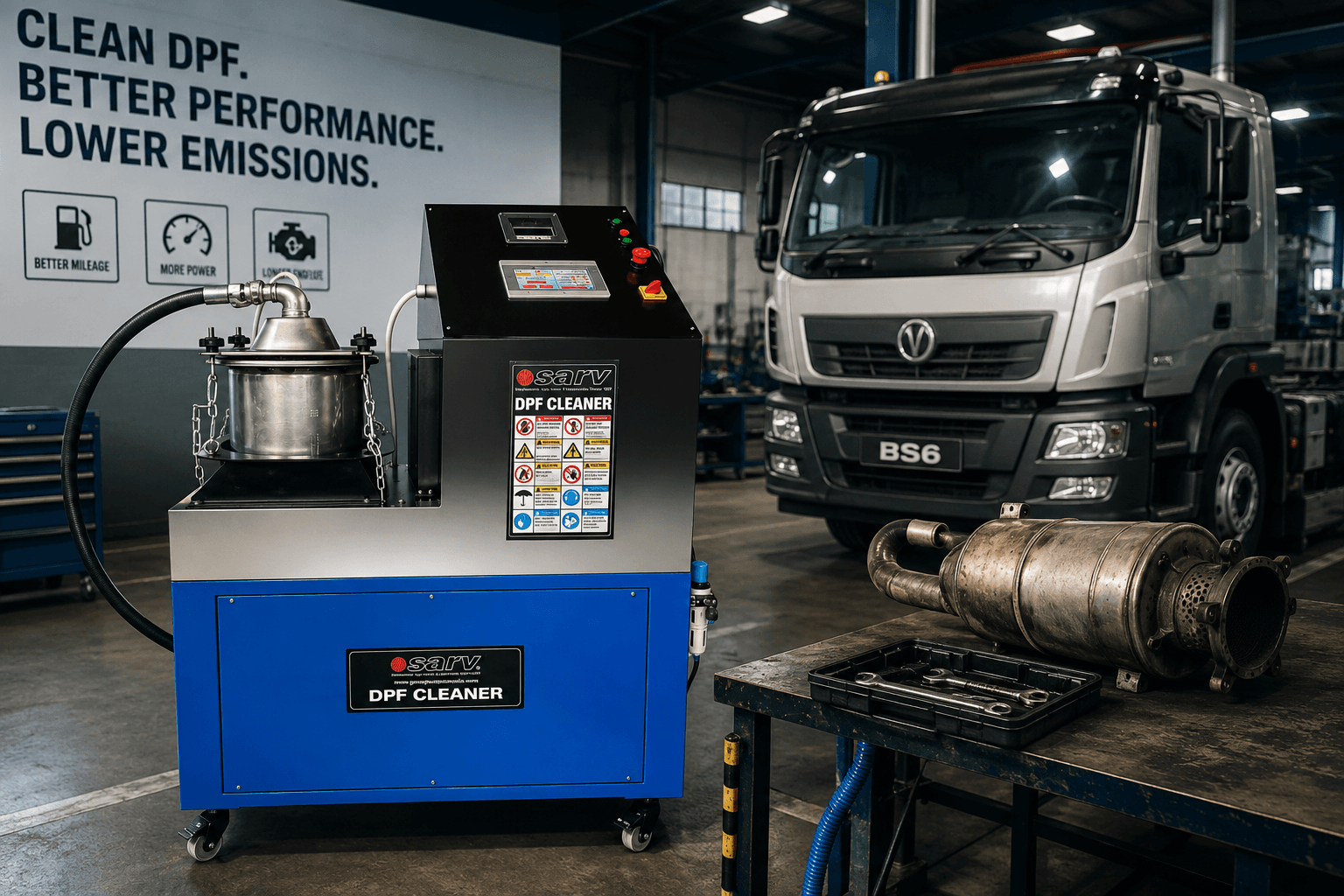
Modern fully automatic and semi automatic cleaning machines help workshops clean filters efficiently with minimal labor.
This improves:
- Service speed
- Workshop productivity
- Fleet turnaround time
Fully Automatic vs Semi Automatic DPF Cleaning Machines
Commercial workshops often choose between fully automatic and semi automatic systems.
Fully Automatic DPF Cleaning Machines
These systems provide:
- Automated cleaning cycles
- Advanced pressure control
- Efficient soot removal
- User-friendly operation
Best for:
- Large workshops
- Fleet maintenance centers
- High-volume DPF cleaning operations
Advantages
- Faster cleaning
- Consistent results
- Reduced manual effort
- Improved productivity
Semi Automatic DPF Cleaning Machines
Semi automatic systems require partial operator involvement during cleaning.
Best for:
- Small workshops
- Budget-conscious businesses
- Moderate cleaning volume
Advantages
- Cost-effective
- Reliable performance
- Lower initial investment
Both systems are valuable depending on workshop requirements and business scale.
Best Practices for DPF Maintenance
A preventive maintenance approach can reduce breakdowns and improve fleet performance.
1. Follow Regular Inspection Schedules
Inspect DPF systems periodically for:
- Soot buildup
- Sensor issues
- Exhaust leaks
- Regeneration failures
2. Use Quality Fuel
Good-quality diesel fuel reduces soot production and supports cleaner combustion.
3. Train Drivers
Drivers should understand:
- Warning indicators
- Regeneration procedures
- Proper driving habits
This helps reduce unnecessary DPF problems.
4. Monitor Regeneration Cycles
Frequent regeneration may indicate:
- Excessive soot buildup
- Sensor malfunction
- Underlying engine problems
Early diagnosis prevents bigger issues.
5. Invest in Professional DPF Cleaning Equipment
Workshops serving commercial fleets should invest in advanced DPF cleaning solutions to provide reliable and efficient maintenance services.
The Financial Impact of Poor DPF Maintenance
Many fleet operators underestimate how expensive neglected DPF systems can become.
Costs Associated with Poor Maintenance
- Increased fuel expenses
- Engine repair costs
- Turbocharger failures
- Vehicle downtime
- DPF replacement costs
- Lost operational productivity
Regular cleaning is far more affordable than major repairs or filter replacement.
Why Fleet Operators Are Prioritizing DPF Maintenance in 2026
As emission standards become stricter and fleet competition increases, businesses are focusing more on preventive maintenance strategies.
DPF maintenance is no longer optional for commercial fleets.
Fleet operators are investing in:
- Advanced DPF cleaning technology
- Preventive service schedules
- Automated cleaning systems
- Workshop efficiency improvements
This helps improve:
Consider these authority resources:
Proper DPF maintenance plays a critical role in the success of commercial fleet operations. A neglected DPF system can increase fuel costs, reduce engine efficiency, and create costly downtime for transport businesses.
Using a professional DPF cleaning solution helps fleets maintain peak vehicle performance, extend engine life, improve fuel efficiency, and comply with modern emission standards.
Whether you operate a transport fleet, commercial workshop, or maintenance center, investing in advanced DPF cleaning technology is a smart long-term decision.
Looking for a reliable DPF cleaning solution for your workshop or fleet?
Explore advanced Fully Automatic and Semi Automatic DPF Cleaning Machines:
contact DPF Clean India for more details.